Decide whether this trip suits the cat
A quiet room at home with a reliable caregiver may be a better fit for a short absence. A move is a different question. Think about the whole journey, including travel to the airport, security, waiting, connections and the trip from the other end. Ask your veterinarian about your cat’s health, temperament and ability to tolerate that journey, particularly if the cat has breathing problems or is unwell.
Check directly with the airline before committing to a flight. Space in the cabin, the permitted carrier, the route and transport policies vary. Ask how the airline handles temperature limits, long delays and animals traveling separately from passengers. A direct route, when possible, reduces handoffs and waiting between flights.
The paperwork depends on the route
For international travel from the United States, the destination sets the entry requirements. Some destinations require an examination, identification, specific records and an endorsed health certificate within particular time windows. The country where the cat clears customs and any onward journey both matter. Start early enough for the veterinarian to check the details.
Domestic airline requirements can differ too. Ask what the carrier needs at check-in and what your arrival destination requires. Carry accessible copies of the cat’s documents and a current photograph. Check that the registration attached to a microchip can reach you.
Sources USDA questions on international pet travel USDA guidance on preparing cats for flight
Practice in the carrier that will travel
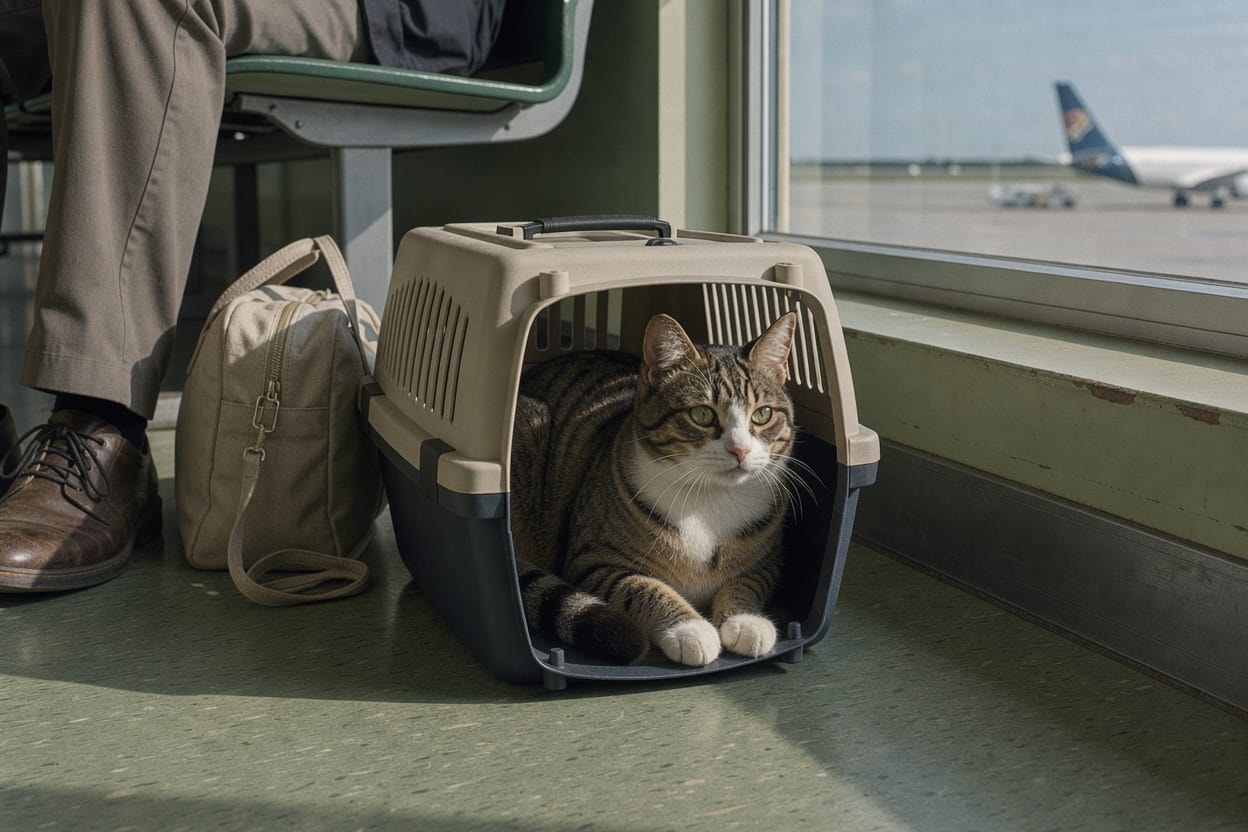
The airline can confirm the dimensions and construction it accepts for the cabin or hold. The cat needs suitable ventilation and enough room to stand, turn and lie comfortably. Check closures and the floor. Put familiar, absorbent bedding inside. Practice entering and resting in that carrier well before departure.
When a cat will travel in the hold, ask staff exactly how the kennel must be marked, how the door can be opened in an emergency, and how feeding and watering instructions should be attached. Confirm where the cat will be received and collected. The clinic and carrier can explain the arrangements appropriate to this journey.
At the airport and on arrival
Keep the carrier closed in open public areas. Ask security personnel about a private screening space if the cat must come out. Tell airline staff when a cat is traveling separately from you, and ask who will check its welfare if the flight is delayed or changes gates.
At the destination, take the closed carrier into a secure room before opening it. Set out water, a litter tray and a familiar blanket. Check that the cat is breathing comfortably and moving normally, and follow the veterinary plan for the journey. Call a veterinarian if it is unwell. A cat struggling to breathe needs emergency attention.
Source The feline association on getting comfortable with a carrier