
Wellness exams through a cat's life
- Watch for
- Changes in habits, weight, movement and contact
- Ask your vet
- What does this cat need at this stage of life?
- Related
- Vaccines · Getting to the vet · Older cats
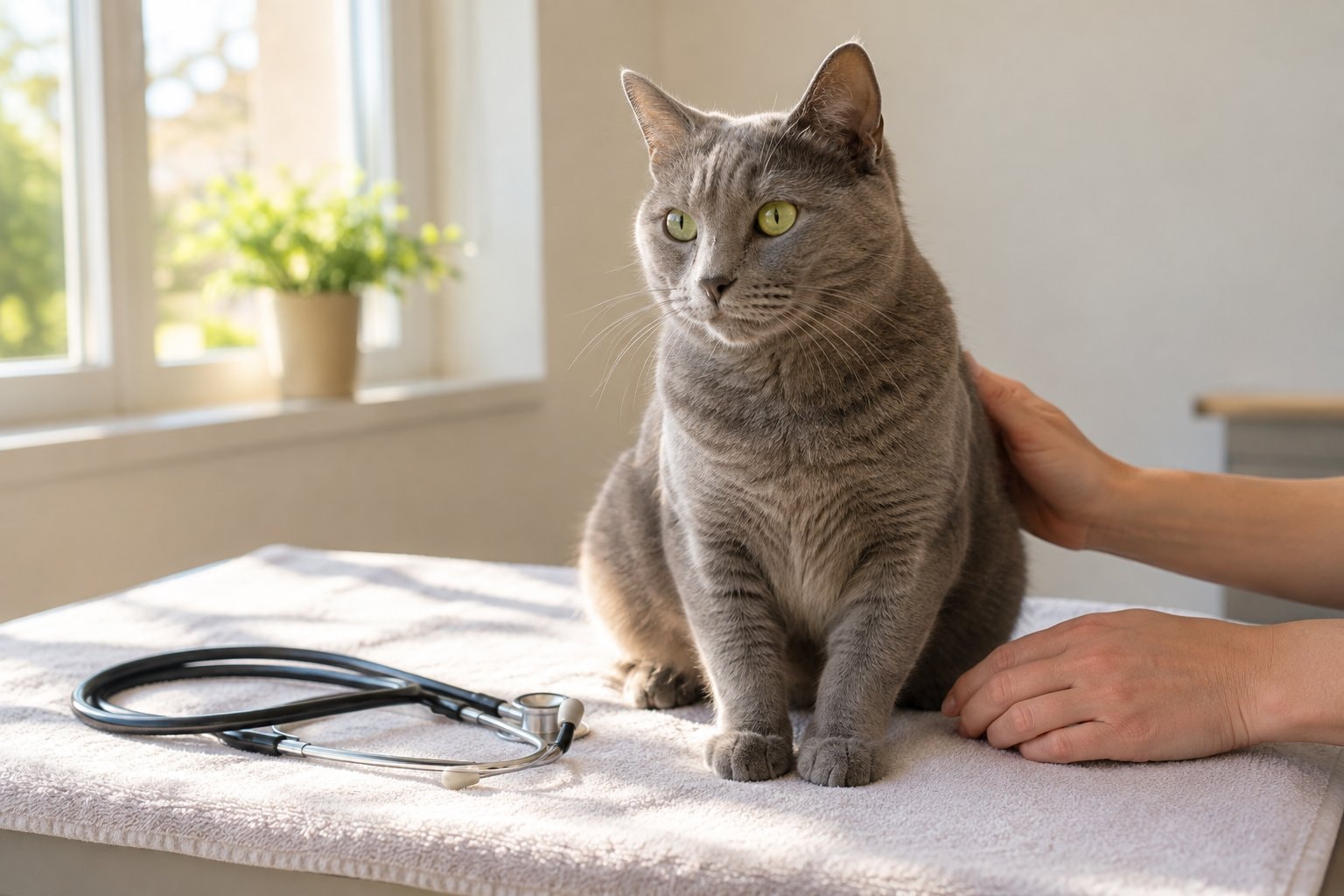
A wellness exam is a veterinary visit for a cat that may seem well at home. It is a chance to review everyday care, compare observations and examine the cat before a concern becomes obvious to the household. Looking comfortable in a familiar room does not tell you everything about a cat's health. Routine visits and attention to changes work together.
How often does a cat need a checkup?
The Merck Veterinary Manual recommends a full checkup at least once a year for adult cats and twice a year or more often for senior cats. That is a general recommendation to discuss with your veterinarian. A cat's existing health condition or new signs may mean a different visit plan.
Do not wait for a routine visit when the cat seems unwell. Tell the clinic what changed and ask when the cat needs to be seen. A diary can help with that conversation, but keeping notes is not a reason to postpone it. The time set aside for routine care cannot cover every unexpected problem between visits.
If journeys make visits difficult, bring up the difficulty before it leads to missed care. Describe how your cat responds to the carrier, travel and the clinic. Ask how the team can plan the next visit around those concerns. The guide to carriers, journeys and calmer veterinary visits offers practical points to consider at home.
Care changes as a cat grows older
The American Animal Hospital Association and AAFP life-stage guidelines frame veterinary care around a cat's stage of life as well as its lifestyle. A kitten's growth raises different questions from those of a mature cat. Care for an older cat needs another review rather than simply repeating the plan used earlier.
For a kitten, describe the home, other animals and what is known about earlier care. Ask about food suited to growth and the routine examinations the veterinarian recommends. Bring any records available and say when the history is incomplete. Guessing about an earlier visit or vaccination is less useful than making that uncertainty clear.
For an adult cat, review meals, water, activity and body condition even when nothing seems wrong. Changes in work routines, household members or outdoor access can alter daily life. Mention them alongside your observations. The veterinarian can then decide which aspects matter for the examination and which questions need further discussion.
The AAFP senior-care guidelines emphasize the changing needs of each older cat and the role of the caregiver in decisions with the veterinary team. Age does not explain every new behaviour. Describe slower movement, different sleep, changes in eating or increased litter output so those changes can be assessed.
An older cat may need closer attention at home and more frequent veterinary review. Ask how to make the next visit useful rather than treating the checkup as a fixed package. The page on caring for an older cat explains accessible home arrangements and observations that can help you prepare for that discussion.
What the visit may include
A wellness visit usually combines a medical and behaviour history with a physical examination. The history comes partly from you: what the cat eats, how it uses the litter box, where it sleeps and what activities have changed. Answer as concretely as you can. The team needs a picture of ordinary home life, not only a description of the journey.
The veterinarian may compare weight and body condition with earlier checks, assess movement and examine the cat's body. Mouth and dental health are part of the conversation too. Explain any reluctance to chew, changes in grooming or sensitivity to contact. A cat's response in the clinic may differ from its response at home.
Blood or urine tests may be discussed when the cat's age, examination or history makes them relevant. Ask what a suggested test is intended to investigate and how the results fit the other findings. Tests provide information for the veterinarian's assessment. No single observation at home gives the same picture as an examination and an appropriate diagnostic plan.
Ask what the visit has shown and what remains uncertain. If the veterinarian recommends another check, find out what changes need to be reported before then. Understanding the purpose of follow-up makes it easier to keep useful notes. Request clarification if a term in the discussion is unfamiliar; an explanation is more helpful than an unexplained label.
Bring the story of your cat's daily life
Prepare a short list of changes rather than relying on memory once the cat is in an unfamiliar room. Put the most concerning change near the top. Describe when it began, whether it is constant or comes and goes, and what was usual before it happened. Say what you have observed directly and what you only suspect.
For meals, bring the food label or a clear description and include extras used during play. For water, describe whether drinking seems different and whether the litter contains more urine. For toileting, mention difficulty entering the box, visits that seem unproductive or soiling elsewhere. These details help separate changes in access from possible illness.
For movement, explain the places the cat used to reach and now avoids. For grooming, mention a patch that looks untidy or an area the cat no longer seems to groom. For social behaviour, describe changes in hiding, contact or tolerance of handling. An ordinary example from the cat's routine is more useful than calling the cat difficult.
Bring previous records if the clinic does not have them. Include the vaccination history when known, and note any uncertainty. The page on vaccines for cats explains why lifestyle and past care belong in that conversation. The veterinarian can decide what information needs to be confirmed.
Leave with a clear understanding
Before leaving, ask what to observe next and which changes call for prompt attention. Keep written instructions together with your notes. If different people care for the cat, make sure they can find the plan and understand what to report. A visit is most useful when the discussion can be carried into the cat's ordinary routine at home.