
Why cats hide illness — and why behaviour is a health sign
- Watch for
- New withdrawal, altered movement, less grooming or a change in social contact
- Ask your vet
- Whether a change in behaviour could be linked to pain or illness
- Related
- Signs of illness, the litter box, arthritis and wellness exams
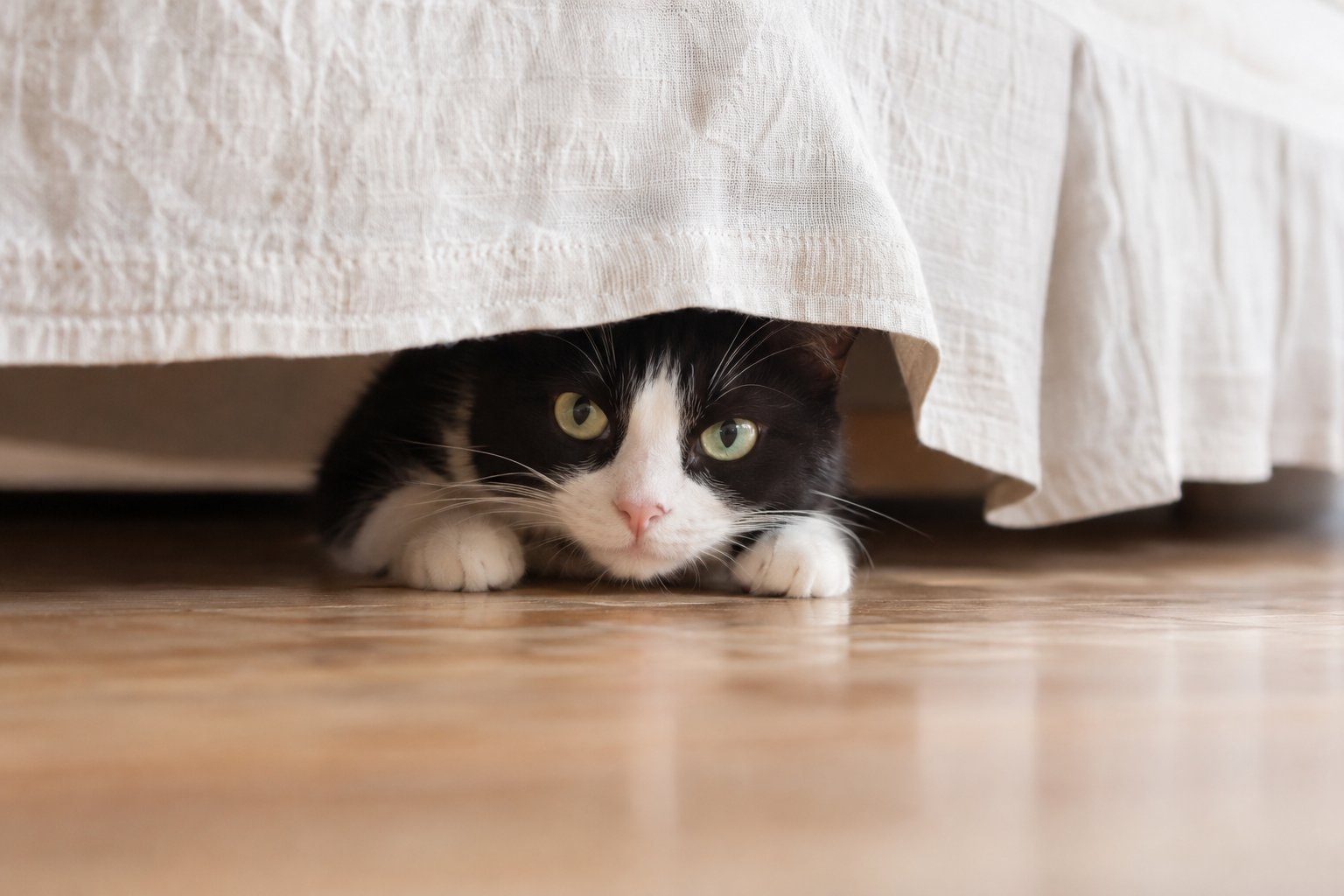
A cat that feels unwell may not make a clear announcement. It may stay quiet, avoid a familiar jump or spend less time with the household. Owners can miss these changes because the cat still looks like itself. Hiding illness does not mean a cat is trying to mislead anyone; it means that outward signs may be limited and everyday behaviour deserves attention.
The useful question is how your cat’s routine has changed. A cat that has always liked a secluded bed is different from a cat that suddenly leaves its usual sunny chair to stay out of reach. Look at hiding alongside food, water, litter use, movement and interaction. The signs of illness page brings those observations together and explains when immediate veterinary contact is needed.
A hunter that also needs safety
Domestic cats are small predators: stalking, watching and pouncing are part of their behaviour. They may also need protection from larger animals or from a situation they find threatening. A safe resting place allows a cat to withdraw from attention. These parts of feline life help explain why seeking cover is normal, rather than automatically a sign that something is wrong.
Normal hiding and a worrying change can look similar from across the room. Context helps. Does the cat choose its usual retreat, then come out to eat and interact as expected? Or is it newly staying apart, moving less or avoiding contact? The difference is worth describing to the veterinarian. It is not necessary to decide whether the cause is fear, pain or illness before arranging a visit.
Quiet behaviour does not settle health questions
Cats can conceal signs of pain, particularly with joint disease. A cat may rearrange its life around a difficult movement instead of visibly struggling with it. Choosing a lower bed or no longer climbing onto the sofa may be easier to notice than a limp. An owner sees where the cat spends its time; the veterinarian needs those details to assess what has changed.
Do not use a purr as proof that everything is comfortable. Cats can purr when stressed, in pain or ill as well as when content. Likewise, a cat that allows a brief stroke has not passed a health check. A normal moment can be part of a changed day. Observe the pattern without testing the cat by pressing a sensitive place or encouraging a jump it has begun to avoid.
Behaviour belongs in routine veterinary care
The American Association of Feline Practitioners’ 2004 behaviour guidelines were written to help veterinary practices include behavioural medicine in feline health care. That makes a change in litter habits, social contact or activity a valid reason for discussion at a visit. A question about behaviour does not need to wait until there is a separate, obvious physical symptom.
Useful descriptions are specific and ordinary. Explain that the cat has stopped joining you during its usual quiet time, now hesitates at a step or turns away during grooming. Mention whether the change began around a move, a new animal or a change in routine. Avoid labels such as stubborn or lazy, which do not tell the veterinarian what the cat is doing or what might be difficult for it.
House-soiling is a reason to investigate
The AAFP and International Society of Feline Medicine’s house-soiling guidelines explain that unmet physical, social or medical needs can be involved, and that affected cats are sometimes given up to shelters. Urine or stool outside the box deserves investigation rather than blame. Pain, increased urgency, trouble reaching the box or an uncomfortable setting can all matter.
A cat can have a medical cause for house-soiling without otherwise looking sick. Arrange a veterinary examination, and describe the location, the cat’s posture and any visible difficulty. Do not punish the cat or force it into the box. The litter-box guide explains access and placement, while keeping the veterinary check central to a new problem.
Pain may change the shape of a day
A 2012 review of feline osteoarthritis notes that most cats with this condition do not limp, and that gradual changes in behaviour can be mistaken for ageing. Osteoarthritis is a joint condition that can be painful. A quieter older cat may need assessment even if it is still eating and has found ways to get around the home.
Changes in mobility, grooming, activity and general response are part of recognising long-term joint pain. Notice whether the cat uses different resting places, has stopped a familiar activity or is less comfortable with touch. Bring those observations to the veterinarian, who can examine the cat and decide what they mean. The arthritis and mobility page looks more closely at these quieter changes.
Pain recognition also means leaving room for uncertainty. An irritable response can have different causes, and a cat that hides is not automatically in pain. The aim is to ask for an assessment rather than assign a condition. Do not try to repeat an upsetting movement to make the sign clearer. What you have already noticed during normal life can start the conversation.
A safe retreat and a clear view of the routine
A cat can have a quiet place to rest while you keep track of its routine. Notice whether it comes out for food, drinks, uses the litter box and moves as usual. Observe gently from a distance when possible. A new pattern of withdrawal combined with less eating or movement deserves veterinary attention; waiting until the cat is visibly distressed can miss the earlier change.
Keep notes brief enough to use at the visit. Record what is different, when you noticed it and whether it is continuing. In a household with other cats, say when you are unsure whose food or litter output you have observed. Ask the clinic what information would help and how to bring a cat that is reluctant to leave its retreat. The cat’s safety and prompt assessment matter more than a complete diary.
Regular veterinary conversations can include behaviour even while a cat seems well. Tell the veterinarian about the cat’s usual activity, hiding places and social habits, so later changes have context. The wellness exam page explains how home observations fit into routine care. A familiar personality is a useful reference point, but an examination is needed to decide whether a new behaviour is linked to health.