
A good indoor life: what cats need at home
- Watch for
- Access, resting choices, play and tension between cats
- Ask your vet
- Does the home suit this cat’s needs and mobility?
- Related
- Behaviour · Litter box · Play and exercise
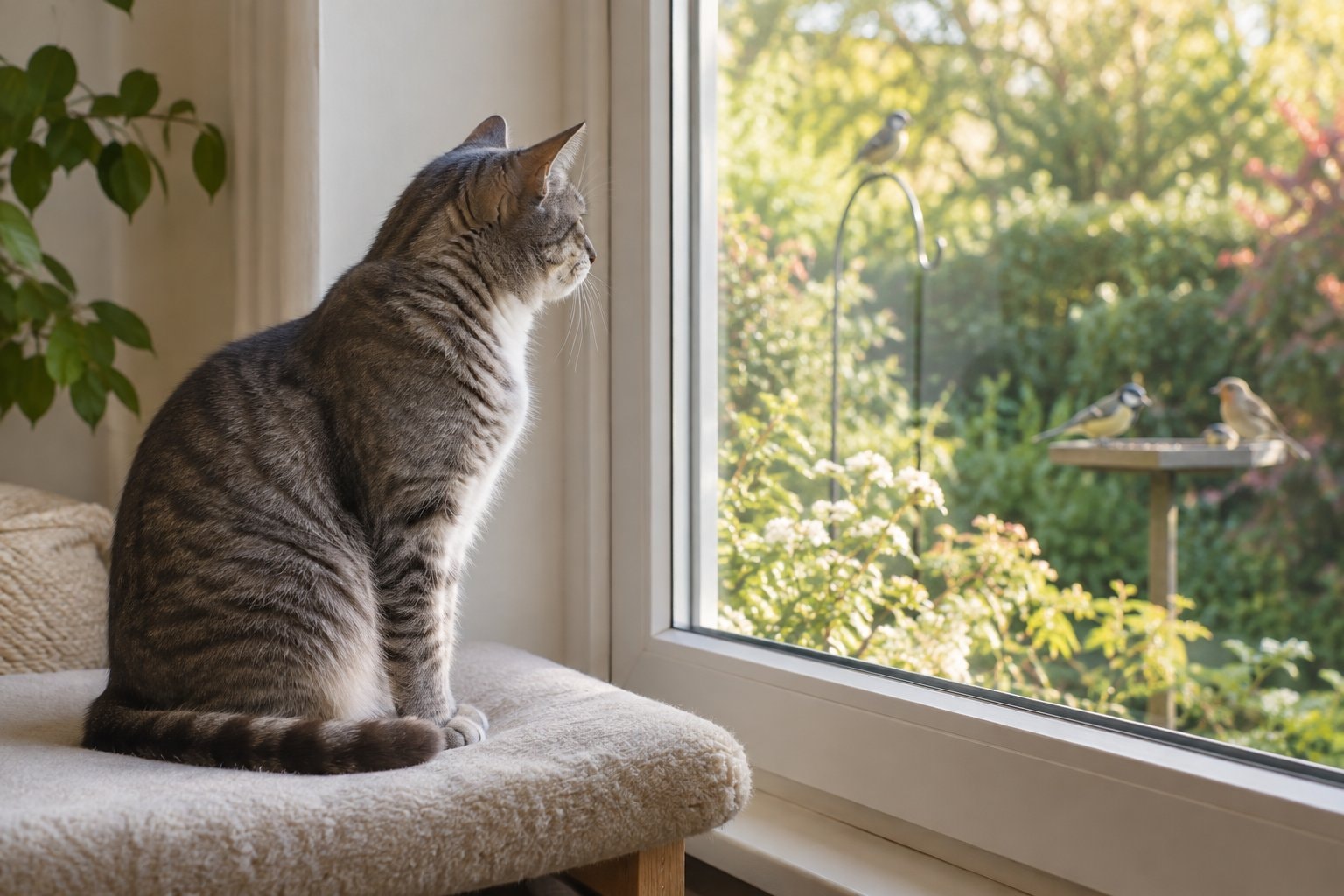
An indoor home can offer a cat places to rest, watch, scratch, search and play. Think about the rooms as the cat uses them, including routes between resources and ways to step away from activity. A home full of cat items is not automatically a home the cat can use comfortably. Watch which places your cat chooses and which it avoids.
Start with the cat's needs
The AAFP and International Society of Feline Medicine environmental-needs guidelines describe a framework for a healthy feline environment that applies whatever a cat's lifestyle. They also explain that cats may experience stress without showing obvious signs. The practical question is how the home fits the individual cat, rather than whether it looks like an ideal cat room.
Notice where your cat eats, drinks, sleeps and uses the litter box. Follow its route through the household. Does it have to pass another animal in a narrow space, cross a noisy area or climb to reach something essential? Observations like these give you a way to discuss the home with the veterinarian.
Keep changes manageable and watch the response. A new arrangement may suit the room but interrupt a familiar route or remove a place the cat often uses. Ask about adapting the environment when mobility, fear or a health condition affects access. The cat's response matters more than the appearance of the arrangement.
Places to withdraw and places to watch
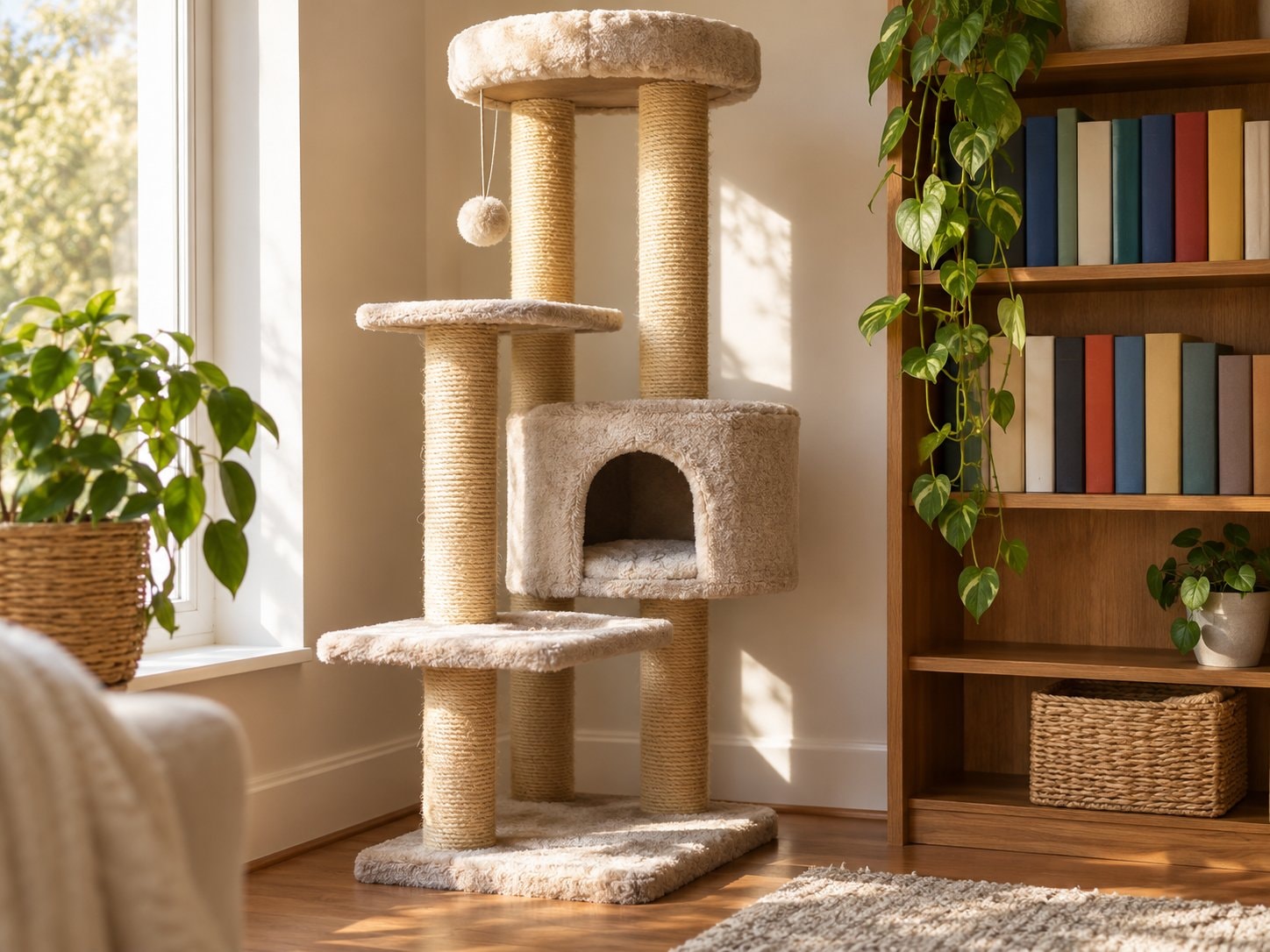
Offer sheltered resting places that remain accessible. A quiet bed, an open carrier or a comfortable box can provide a place to step away from household activity. Let the cat choose whether to use it. Avoid repeatedly reaching into a resting place to draw the cat into an interaction it has not sought.
Consider a higher resting place as well, if the cat can reach it safely and comfortably. Check the route up and down, the stability of the surface and what happens when another animal approaches. For a cat with limited mobility, discuss lower alternatives or a suitable route with the veterinarian rather than expecting a difficult climb.
A secure window perch can offer a view of the garden and passing activity. Notice whether the cat rests there calmly or becomes tense in response to animals outside. Keep windows and the route to the perch secure. A window view is a possible part of the home, not something every cat has to enjoy.
Resting places need choice. An area beside the household may suit a sociable cat at some times, while a quieter place may be preferred at others. Keep suitable options available without forcing the cat to remain where people gather. Watch for a new pattern of withdrawal and tell the veterinarian if it differs from the cat's usual habits.
Scratching belongs in the home
The ASPCA's general cat-care page describes scratching as a normal need and recommends stable scratching surfaces. Provide a surface that remains steady when the cat stretches against it. Watch whether your cat chooses an upright surface or a flatter one, and think about its ordinary routes when deciding where to place it.
A scratching surface hidden far from the areas the cat uses may receive little attention. Consider locations near resting places or familiar paths, while keeping access clear. If the cat scratches elsewhere, describe the pattern before assuming it is being difficult. The guide to scratching, fear and stress explains how behaviour and health can overlap.
Keep the focus on giving the cat an appropriate place to express ordinary behaviour. Notice whether it can stretch comfortably and whether another pet crowds the area. A sudden change in scratching or movement deserves discussion, particularly if it comes with reduced activity or a change in tolerance of touch.
Keep essentials in suitable places
Food, water and litter areas need space and suitable access. Avoid making the cat pass through the toileting area to reach a meal. Watch whether noise, household traffic or the presence of another animal interrupts eating or drinking. A cat may wait until the room is quiet even when a bowl is technically available.
Place litter resources where the cat can reach them without an awkward route. Think about what happens when an appliance starts, a door closes or another cat sits in the approach. Keep the location practical for cleaning as well as quiet for use. The page on litter-box setup and urinary health explores these questions in more detail.
Separate locations can matter when cats share a home. Look beyond whether there is enough equipment and consider whether each cat has an opportunity to use it. A cat waiting at a doorway or leaving when another enters gives you information about access. Tell the veterinarian about these patterns if tension or changes in toileting develop.
Play can reflect a cat's natural interests
Wikipedia's reference on cat play describes object play as including actions that resemble hunting, such as chasing and pouncing. Offer opportunities that fit your cat's interest and ability. A cat may prefer to watch before joining in, so leave room for its response instead of expecting immediate activity.
Let the cat choose an engaging game and a comfortable pace. Consider how furniture, floor space and other animals affect the activity. Food puzzles or searching activities can be another way to explore part of a meal, with the food included in the cat's ordinary intake. Ask the veterinarian about suitable activity if health or weight is a concern.
Keep playthings put away when they need supervision, especially anything with loose string or small parts. More suggestions appear in play, exercise and a healthy weight. A change in willingness to play is also worth noticing; a cat that stops joining a familiar game may need an examination.
Interaction and shared space
Use predictable routines and give the cat a choice about approaching for contact. Watch its posture, ears and tail, and pause when it turns away or seems tense. The purpose is to understand the response rather than insist on affection. Different cats in the same household may want different amounts of interaction.
Tension between cats can affect access even when there is no obvious fight. Observe waiting, avoidance and blocked routes alongside more visible conflict. Discuss persistent tension with the veterinarian, especially if it is accompanied by a change in appetite, litter use or activity. Check the home for household hazards as well as suitable resources.