
Feeding your cat: meals, water and a healthy weight
- Watch for
- Appetite, thirst, weight and access to meals
- Ask your vet
- Which food and portion suit this cat?
- Related
- Play and weight · Common illnesses · Indoor life
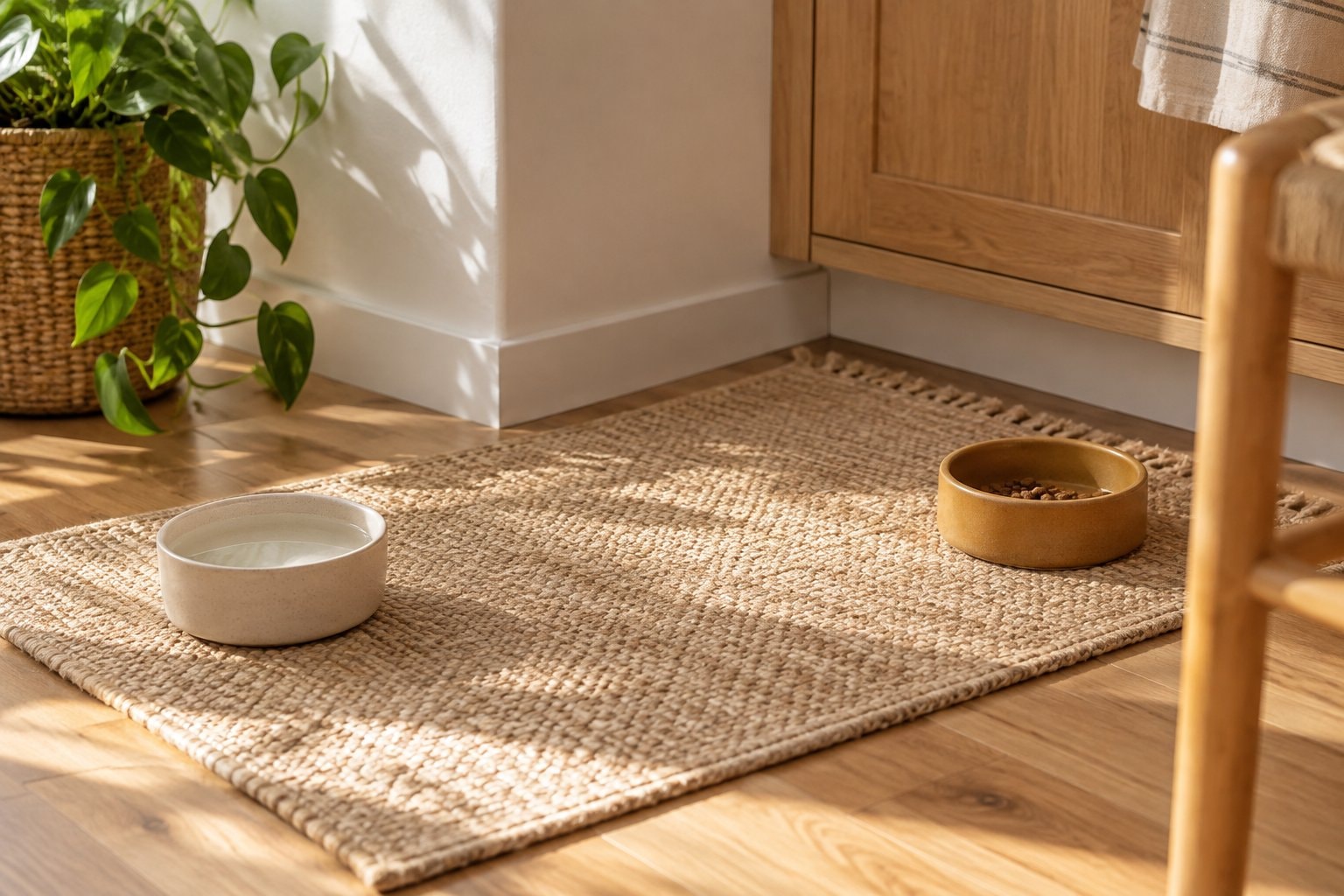
A feeding routine is also a chance to notice your cat. Look at how readily your cat comes to eat, what remains in the bowl and whether drinking habits have changed. A familiar routine gives you something to compare with a new pattern. The aim is a meal that suits this particular cat, rather than a rule borrowed from a different household.
Food that fits a cat
The Cornell Feline Health Center's feeding guide describes cats as obligate carnivores: they need nutrients supplied by animal foods. That does not make an isolated ingredient a complete meal. Protein, fat, vitamins, minerals and other nutrients need to be present in the right balance. The useful question is whether the whole food meets a cat's nutritional needs.
Read the nutritional statement as well as the front of the package. Look for an indication that the food is complete and balanced, and note the life stage for which it is intended. Descriptions of flavor or an attractive picture do not answer those questions. Take an unclear label to the veterinarian rather than trying to judge the food by its appearance.
A growing kitten and an adult cat do not have identical nutritional needs. Pregnancy and nursing also change those needs. Food choices can therefore change during a cat's life. If cats of different ages live together, ask how to keep their meals appropriate while making sure a cat does not quietly eat from another cat's bowl.
Make portions part of the conversation
The amount a cat needs depends on the individual. A package's feeding guide can be a starting point for discussion, but it cannot assess your cat's body condition. Ask the veterinarian what a suitable weight looks like for your cat and how the current meal routine fits that goal. Bring the food label and describe everything the cat eats.
Include snacks and food used during play in that description. It is easy to remember the main meal while forgetting small extras offered by different people. A shared note about what has been served can make the account clearer. The purpose is to understand the total, not to set a weight-loss plan without a veterinary assessment.
Compare weight checks made at veterinary visits, and ask the clinic how to keep useful records between them. A thick coat can make a change in shape less obvious. Likewise, a cat may still approach the bowl eagerly while losing weight. Appetite and body condition tell different parts of the story, so an apparently good appetite does not settle a concern.
If weight is a concern, bring questions about activity as well as food. The page on play, exercise and a healthy weight explains how to think about enjoyable movement without turning every game into a demanding workout. Let the veterinarian decide whether a change in portions or food is appropriate, particularly when a cat already has a health condition.
Water, wet food and dry food
Keep clean, fresh water available. Look at the bowl itself as well as its location: is it easy for the cat to reach, away from litter, and somewhere the cat can drink without being interrupted? A bowl hidden behind furniture may be convenient for the room but awkward for the animal using it.
Wet and dry foods differ in moisture as well as texture and other qualities. Wet food contributes water through the meal; a cat eating dry food still needs ready access to drinking water. Neither texture tells you, by itself, whether a food is nutritionally complete. Discuss the whole feeding pattern, including what your cat accepts, with the veterinarian.
Notice a change in drinking rather than trying to decide from a single visit to the bowl. If several cats share water, describe what you can actually observe and what remains uncertain. Larger amounts of urine in the litter box can be another useful detail. Keep water available while asking the clinic about a new pattern.
A place to eat without competition
Noise, traffic through the room and nearby animals can affect a cat's willingness to eat. Give each cat a chance to approach food without being crowded. Watch the route to the bowl, not just the bowl itself. A cat waiting until another animal leaves may have difficulty getting comfortable access even when food is always present.
The AAFP and International Society of Feline Medicine environmental-needs guidelines describe a healthy environment as something that must suit a cat's needs, whatever its lifestyle. Apply that idea to meals by considering space, quiet and choice. Avoid assuming that cats sharing a home want to share the same eating spot.
Food, water and litter need their own suitable places. Cleaning a dish and noticing food left behind are useful parts of the routine. If your cat eats only when the household is quiet, include that in the history you give the clinic. More suggestions about arranging resources appear in a good indoor life.
Searching for food can be part of play
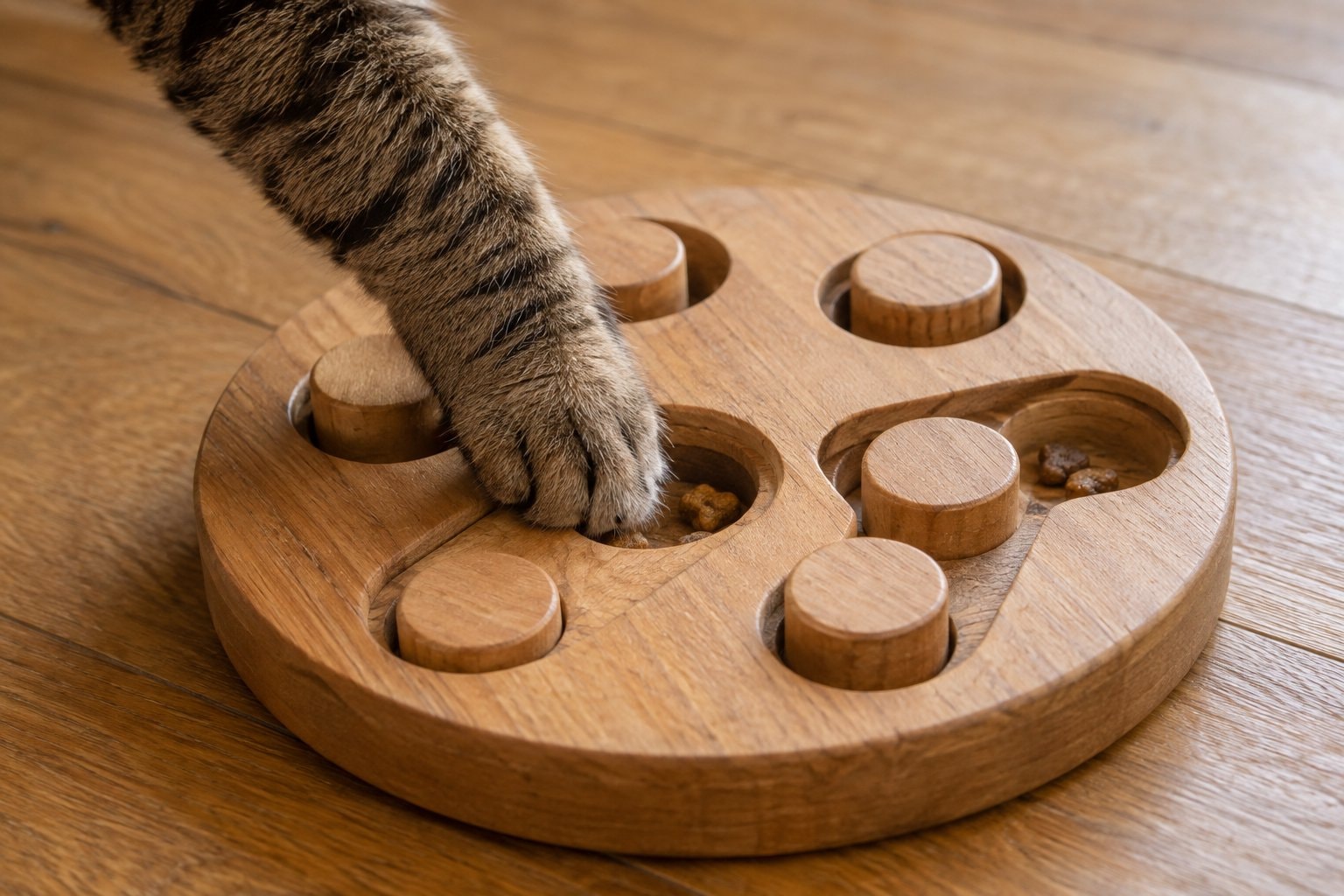
A food puzzle offers a different way to encounter part of a meal: the cat searches, paws or works out how to reach the food. Consider whether the task suits the cat's mobility and confidence. Keep ordinary meal access clear while finding out whether the cat is interested. A puzzle is an activity, not a test the cat has to pass.
Count food used this way as part of what the cat eats. Keep the setting quiet and watch whether another animal crowds the activity. A cat that ignores a puzzle may simply prefer a different sort of play. Ask the veterinarian about an appropriate approach when appetite, weight or a health condition is already a concern.
When the routine changes
The Cornell Feline Health Center's diabetes page identifies weight loss despite a good appetite, together with increased thirst and urination, as signs owners may notice. Those changes are reasons for an examination, not a way to diagnose diabetes at home. Other conditions can affect eating and drinking too.
Make a short account of what changed: eagerness to eat, food remaining, drinking, litter output and weight if known. Note a recent food change or a change in the household as context, without assuming it explains the problem. The overview of common feline illnesses can help you prepare questions for the visit.