
Household hazards, lilies and holiday dangers
- Watch for
- Plants, spills and loose materials the cat can reach
- Ask your vet
- Uncertain exposures and household safety questions
- Related
- Indoor life, signs of illness and the carrier trip
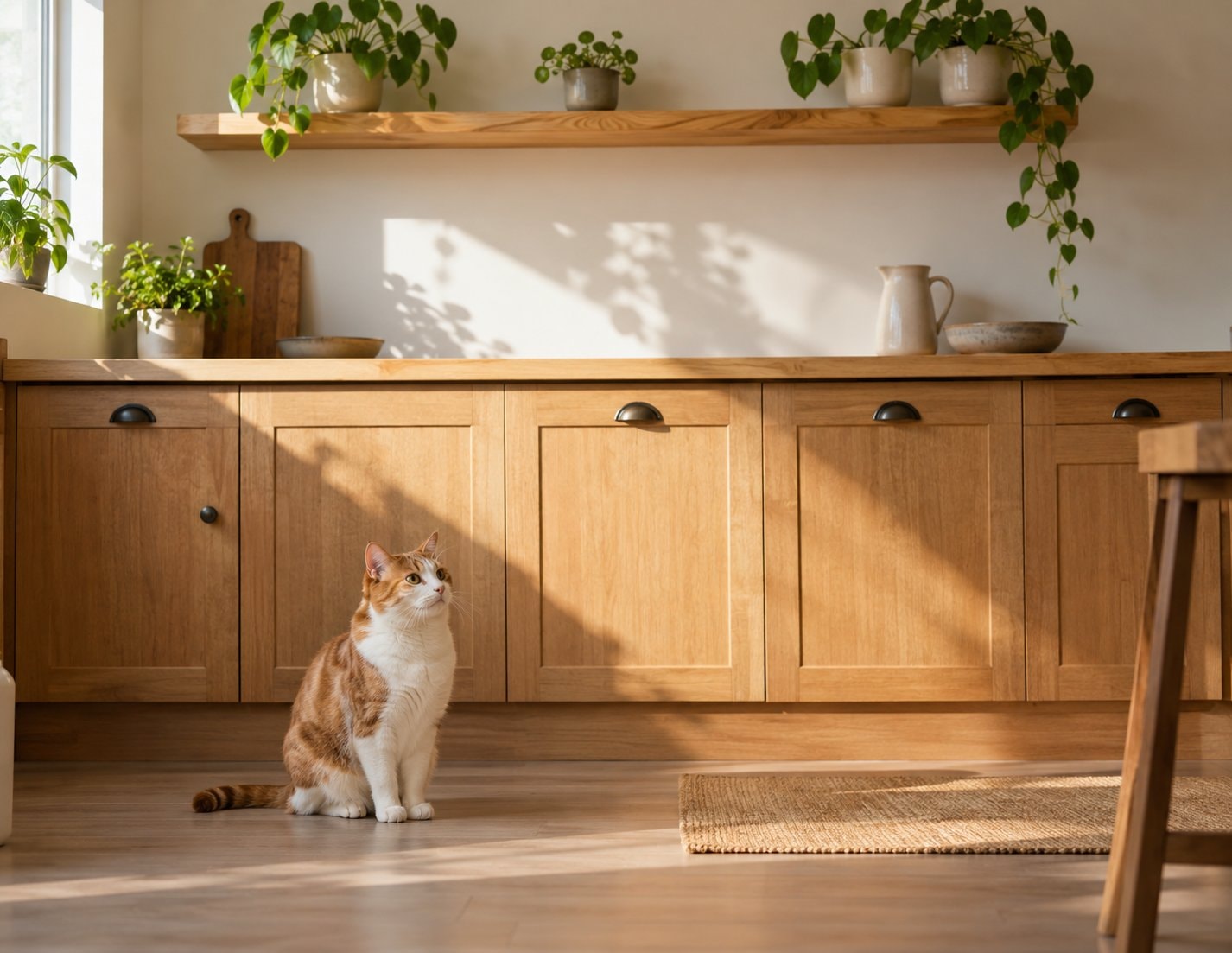
A household safety check begins with the places your cat can actually reach. Look at the windowsill, the dining table, the open cupboard and the floor beneath a chair. Consider where flowers arrive, where cleaning materials are stored and where loose wrapping materials collect. The aim is a manageable home routine, not a catalogue of everything that could go wrong. Keep uncertain items out of reach while asking a veterinarian about their safety.
When exposure has already happened, reading comes second. Contact a veterinarian or an emergency veterinary clinic now for suspected poisoning or contact with lilies. Explain what the cat may have reached and when you noticed it. Do not wait for a particular sign or try to work out a home response from a general webpage.
Lilies deserve special care
The U.S. Food and Drug Administration warns that true lilies and daylilies are extremely dangerous to cats, including their pollen and vase water.
This is why a flower arrangement needs attention beyond the petals. Think about fallen pollen, a vase left within reach and plant pieces carried from room to room. A cat can reach a surface you do not normally see it use. The safest household decision is to keep these lilies out of spaces the cat can access, rather than rely on the cat leaving a bouquet alone.
The FDA advises immediate veterinary contact if a cat may have eaten lily material, licked its pollen or drunk water from a vase containing lilies.
If a plant's identity is uncertain, say so when speaking to the clinic. A photograph of the plant or the arrangement may help explain what was present. Focus on arranging veterinary help, not on watching to see whether the cat begins to look unwell. A cat that seems ordinary after an exposure still needs the concern brought to the veterinarian.
Other plants and everyday chemicals
The Cornell Feline Health Center identifies toxic plants and household chemicals as hazards for cats.
Check plants that sit on low shelves, trail down from a container or are temporarily placed on the floor. A high shelf is only useful if the cat cannot reach it by climbing from another surface. Ask about a plant before bringing it into the cat's space, and keep an unknown plant elsewhere while checking. Avoid assuming that a plant is suitable because it is common in homes or gardens.
Keep cleaning and garden materials in closed storage that the cat cannot open. Think through the moments between taking something out and putting it away: an open container, a spill being cleaned, or a cloth left on a low surface. Keep the cat away while the area is in use. If a spill or contact is possible, call the clinic and explain the material rather than making a guess about its strength.
Human medicines stay out of reach
Cornell warns that common human pain relievers and other human medicines can be poisonous to cats; never offer them to a cat.
Put them away securely and check the floor if something has fallen. A visiting bag, an open drawer or a bedside surface can change what is accessible. Ask visitors to keep their belongings closed and away from the cat's route. If you think the cat has reached a human medicine, contact a veterinarian immediately. Explain what is missing or what you saw; there is no safe dose or home-use instruction on this page.
Ribbon, string and small objects
Keep ribbon, tinsel, loose string and small objects out of the cat's reach. Set wrapping materials aside in closed storage after use, and look underneath the table for pieces that escaped attention. A decorative object that seems too dull to interest you can still invite a paw or a bite. Check an item again if it becomes damaged or comes apart.
Do the same with loose materials used during play. Put them away when the game ends rather than leaving them spread across the floor. If an object is missing and the cat may have swallowed it, contact a veterinarian for guidance. Describe the object as plainly as possible. Do not turn a household concern into an attempt at a home procedure.
Holiday tables and visitors

A busy holiday can alter the cat's ordinary space. Wrapped boxes, visitors' bags, decorations and food move into rooms that were quiet before. Make a simple plan for keeping wrapping materials and rich food away from the cat. Clear the table after use, keep leftovers covered and give visitors a clear place for their belongings. Keep a familiar room available for the cat to rest without being followed.
Noise and movement can also make it harder to see the cat's usual pattern. Check that doors and windows are secure and that the cat can still reach its ordinary resting place, food, water and litter. Ask guests to let the cat approach on its own terms. The indoor-life guide explains how a retreat and predictable access fit into home life.
Be ready to explain an emergency
Keep the carrier accessible and know where your cat's veterinary records and identification details are kept. That preparation is about being able to leave promptly and explain what happened. The carrier and clinic page can help you think through the practical trip before it becomes urgent. If a possible hazard is involved, bring information about the material when the clinic asks for it.
Useful observations include what was accessible, what appears missing, and any change in the cat's behaviour. Stay with plain facts rather than deciding how much danger an item represents. The signs-of-illness page helps organise other changes worth reporting, but it is not a checklist that clears a suspected exposure.