
The litter box: setup, house-soiling and urinary health
- Watch for
- Repeated attempts, crying, blood, accidents or difficulty entering the box
- Ask your vet
- Whether a medical problem explains the change before adjusting the setup
- Related
- Common illnesses, mobility, behaviour and signs of illness
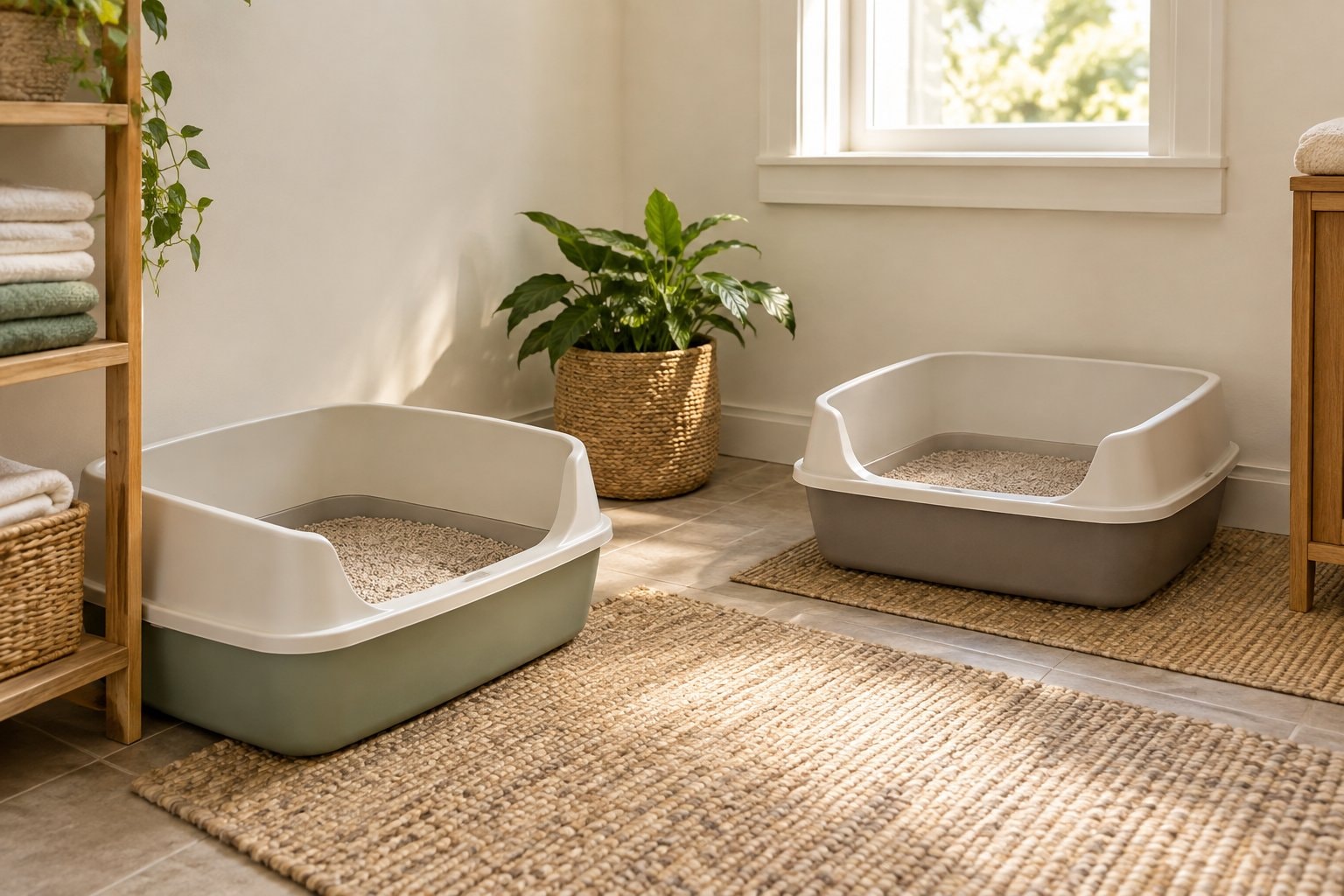
A litter box is part of a cat’s daily routine and a useful place to notice a change in health. A cat that starts leaving urine or stool elsewhere may be finding the box uncomfortable, having trouble reaching it or dealing with a medical problem. The mess does not tell you which explanation applies. Begin by observing what the cat does, then bring a new problem to a veterinarian.
Good setup considers the cat’s route to the box, its ability to get inside and whether another animal can interrupt it. A location that looks tidy to a person may be noisy or awkward for a cat. Think about the arrangement from floor level and from the cat’s usual resting places. Keep the medical question alongside the household details rather than choosing between them too early.
Urinary straining is an emergency
The Cornell Feline Health Center’s urinary disease page explains that an obstruction is an emergency and a cat may make repeated attempts while passing little or no urine. A cat, especially a male cat, straining in the litter box without passing urine needs immediate help: contact a veterinarian or an emergency veterinary clinic now. Do not wait for another trip to the box or assume constipation.
Other urinary signs include crying, blood in the urine, licking around the genitals or urinating away from the box. These signs can have different causes, including inflammation or stones. Describe what you have seen to the clinic. Box cleaning or a change of litter cannot establish the cause, and an apparently small amount of urine does not make ongoing distress a household setup problem.
A veterinary check comes before a behaviour label
The Cornell Feline Health Center’s house-soiling guide explains that urinary pain, kidney or thyroid disease, diabetes, digestive problems and age-related difficulty getting around can contribute to house-soiling. A cat may avoid a box associated with discomfort, or struggle to reach it when urgency increases. It may still seem well in other parts of the day.
Arrange an examination for a new change, even if the cat has used the box reliably before. Tell the veterinarian whether the problem involves urine, stool or both, and whether the cat squats or stands with its tail raised. Mention appetite, thirst and movement as well. The common illnesses guide explains why similar litter changes can occur with different conditions, without deciding which applies to your cat.
Enough boxes, with real access
The ASPCA’s litter-box guidance recommends a litter box for each cat and an extra box. Distribution matters as well as the total: boxes placed together may still require a cat to approach the same doorway or pass the same housemate. Choose accessible locations that offer alternatives through the home, with food and water areas kept apart from the litter area.
Watch the route, not just the destination. A box behind a closed door, beside a busy appliance or at the far end of stairs may not be easy to use. In a home with other animals, notice whether a cat pauses, looks around or waits for a clear path. Resting and feeding areas can also affect where cats spend time, so consider the whole layout rather than moving the box at random.
A quiet place with space to leave
Cats need a box location that is quiet but does not leave them feeling trapped. A cat using the box still needs to see an approaching animal and have a clear route away. Avoid squeezing the box into a recess solely because it fits neatly. Notice whether the cat enters comfortably or repeatedly looks back toward the doorway before choosing another place.
A covered box can retain smells and limit the cat’s view. Some cats dislike lids or liners, while others have particular preferences. A roomy open box can make entry and movement easier to observe. Choose the arrangement with the cat’s use in mind, rather than expecting every cat to accept the same design. Discuss a persistent preference or avoidance with the veterinarian after medical causes have been assessed.
The litter under the paws
Litter texture and scent can matter to a cat. Unscented litter and a shallow layer are common preferences described in owner guidance, but the cat’s experience is still individual. A sudden change may be unwelcome. If the cat has begun avoiding the box, note whether the litter, its depth or the box itself changed around the same time; that history is useful without proving the cause.
Give the cat room to turn and dig without having to balance on the rim. A large cat needs a box that fits its body, and a cat with limited movement may find a high entry difficult. A low entrance can be worth discussing as part of the household arrangement. The arthritis and mobility page explains why access changes can reveal a health concern rather than a new dislike of litter.
Cleaning and keeping the routine clear
Remove soiled litter regularly and keep the box clean without adding a strong scent. A box that seems acceptable to a person may still be unpleasant to a cat with a sensitive nose. Pay attention to the box’s condition rather than masking smells. Cleaning is also a chance to notice a change in urine or stool, although the contents alone cannot tell you what disease, if any, is present.
If there is an accident elsewhere, clean the area thoroughly and keep a record of where it happened. Avoid scolding or carrying the cat back to the box as a punishment. A fearful association with the area can make observing the problem harder. Continue the conversation with the veterinarian rather than adding a succession of changes that leaves the cat with an unfamiliar litter routine.
Housemates and marking
Tension between cats can limit access even without a fight in the box. A cat may control a doorway or another cat may avoid the area altogether. Observe who approaches and who waits. Separate access to essential resources matters in a shared home. The behaviour page looks at fear, aggression and household tension, including why a new behaviour deserves a medical check.
Urine marking often involves standing with the tail raised and directing urine at a vertical surface. It differs from squatting to empty the bladder, but appearance alone is not enough to rule out a medical problem. Tell the veterinarian what you saw instead of assuming spite or disobedience. House-soiling can reflect physical, social or medical needs; a calm description is more useful than blame.
Bring a simple description of the home layout, the available boxes and the timing of the change to the veterinary visit. Include any crying, repeated attempts, larger wet areas or difficulty getting in. The signs page explains which other habits to watch. Only a veterinarian who examines the cat can diagnose the cause and decide treatment; the household observations help inform that assessment.