
Getting your cat to the veterinarian: carriers, car journeys and calmer visits
- Watch for
- Fear during travel and changes at home
- Ask your vet
- How can the visit suit this cat?
- Related
- Wellness exams · Vaccines · Home care
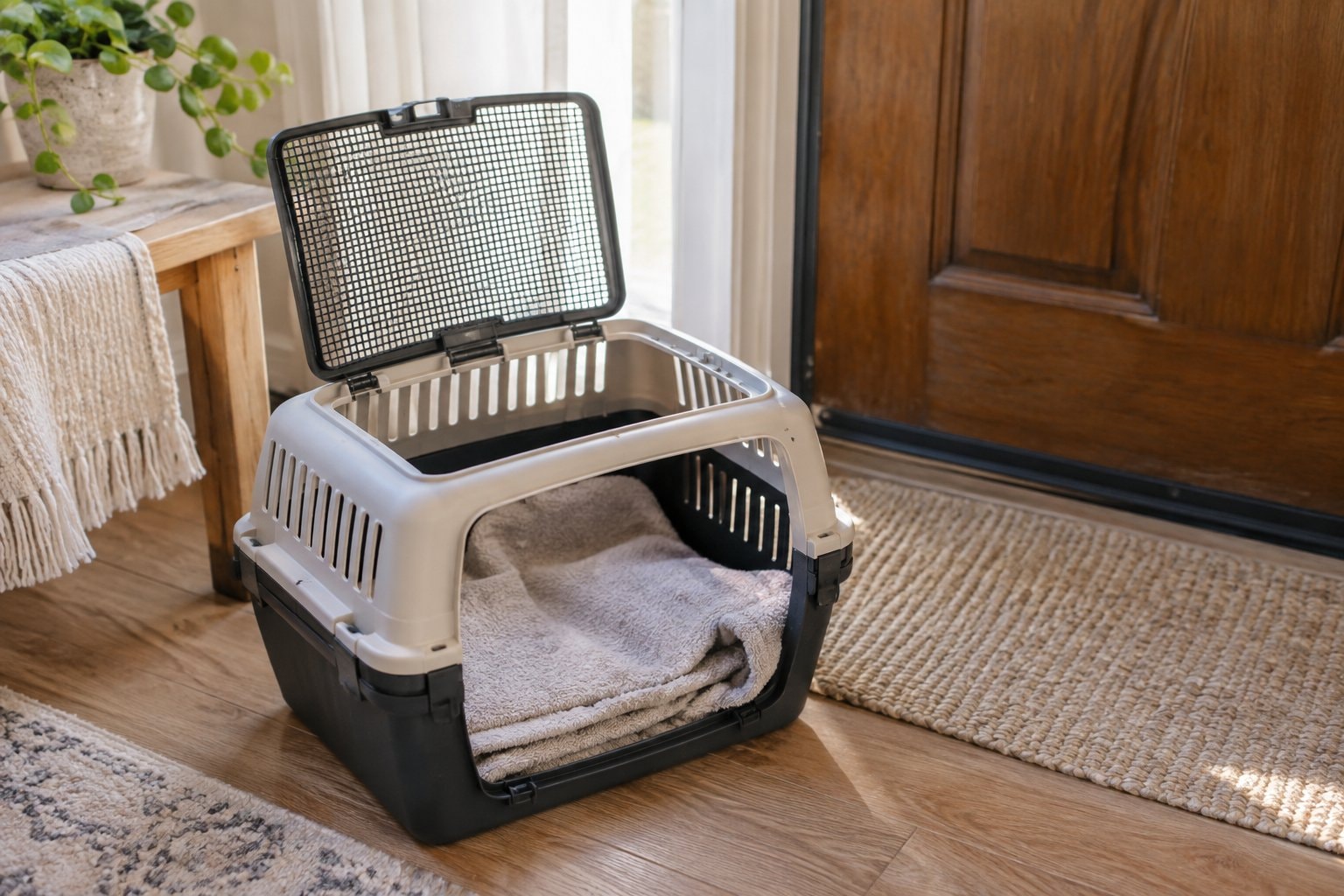
A veterinary visit begins before the car journey. The carrier, the way it is moved and the information you bring all deserve a little thought. You do not have to make your cat fearless. The practical aim is to arrive safely, give the clinic a clear account of home life and help the team understand how your cat responds to unfamiliar situations.
Look at the carrier before you need it
Check that the carrier closes securely and is sound enough for travel. Look at its openings and at how easily you can reach the cat without pulling it through a narrow space. A top-opening carrier or a carrier with a removable top may be worth discussing with the clinic. Ask what arrangement the team finds useful for your particular cat.
Think about the carrier as part of the home rather than something that appears only at the moment of departure. Find a quiet place where it can stand open, with familiar bedding inside. Let the cat choose whether to investigate or rest there. This gives you a chance to observe its response without the pressure of a journey about to start.
Keep the carrier available and its contents simple. A washable towel or blanket is easier to manage than loose household clutter. Notice whether another pet claims the space or blocks the approach. The carrier needs to be accessible to the cat that will travel in it, not simply stored somewhere you can see it.
If your cat is frightened of the carrier, tell the clinic before the visit. Describe what happens: retreating, freezing, struggling when approached or refusing to enter. Ask the team to explain a suitable approach. Trying unfamiliar handling at the last moment can make it difficult to tell which part of the situation troubles the cat.
Plan the route out of the house
Before opening doors, know where the carrier will go and who will move it. Keep other animals away from the departure area and avoid a bustle of people around the cat. Allow enough time to check the closure and carry the carrier steadily. The preparation belongs to the household; the cat does not need to be hurried through a series of surprises.
Have the clinic's requested records and your written questions ready before bringing the cat to the door. This leaves your attention free for the animal and the carrier. If several people are helping, agree who is responsible for the carrier. A clear plan is particularly useful in a home where doors are often being opened for other reasons.
The car journey
Keep your cat inside the closed carrier during the journey. Think about how the carrier will be held securely in the vehicle, and ask the clinic if you are unsure. Check the surroundings for direct heat, drafts or objects that could fall against it. Choose a quiet journey where possible, with gentle movement and as little unnecessary handling as you can manage.
Watch without repeatedly opening the carrier. A cat being quiet is not the same as a cat being relaxed, so describe its posture and reactions when you arrive. If your cat has had difficult journeys before, tell the team what you saw and when it happened. The account can help them plan how to approach the examination.
Do not assume that sudden breathing trouble is an ordinary response to travel. If your cat breathes with effort, breathes with its mouth open or collapses, contact a veterinarian or an emergency veterinary clinic now. Explain that you are travelling and describe the change clearly. A planned routine appointment does not replace an urgent assessment.
At the clinic, let the team learn about your cat
The AAFP and International Society of Feline Medicine cat-friendly interaction guidelines ask veterinary professionals to interpret a cat's emotional state and adapt their approach to the individual. Gentle care begins with noticing how the cat responds, rather than expecting every cat to tolerate the same handling in the same way.
Tell the team about what your cat is like at home and what has happened during the journey. Mention places where the cat dislikes being touched and any recent change in tolerance. Let the clinic decide how to approach the cat and when to open or remove parts of the carrier. Ask before attempting to lift or hold a frightened cat yourself.
Useful questions include where to place the carrier, whether the cat can remain in familiar bedding and how the team will signal that it needs your help. Keep your own movements unhurried. The team may need to pause or change its approach, and the cat's response can differ from what you expected from an earlier visit.
A calmer-looking cat still needs a proper examination. Behaviour during a visit is information, but it cannot explain every change seen at home. Bring concrete observations about meals, drinking, litter use, jumping and social contact. The page on wellness exams through a cat's life explains how those details fit into routine care.
Regular visits belong in the plan
The Merck Veterinary Manual recommends a full checkup at least once a year for adult cats and twice a year or more often for senior cats. Ask the veterinarian how that general recommendation fits your cat's health. New signs of illness need their own discussion rather than waiting for the next routine visit.
The AAHA and AAFP feline life-stage guidelines describe care that changes with a cat's stage of life and lifestyle. A kitten's needs differ from an older cat's, and a change in the household can also alter the questions worth asking. Review the plan when circumstances change rather than assuming an earlier arrangement always fits.
Bring any vaccination records you have, and say when the history is uncertain. The guide to vaccines for cats explains the questions that help a veterinarian assess lifestyle risk. If the cat is going home with instructions after a visit, care at home while it gets better offers a way to organize observations without changing the clinic's plan.
If the journey involves air travel
Air travel with a cat needs advance planning with the veterinarian and the airline. Ask the veterinarian about the cat's ability to travel and use the airline's own current rules for the journey. Requirements can depend on the trip, so general advice about a car journey is not a substitute for those arrangements.