
The Well Cat Guide — feline health for cat owners, in plain language.
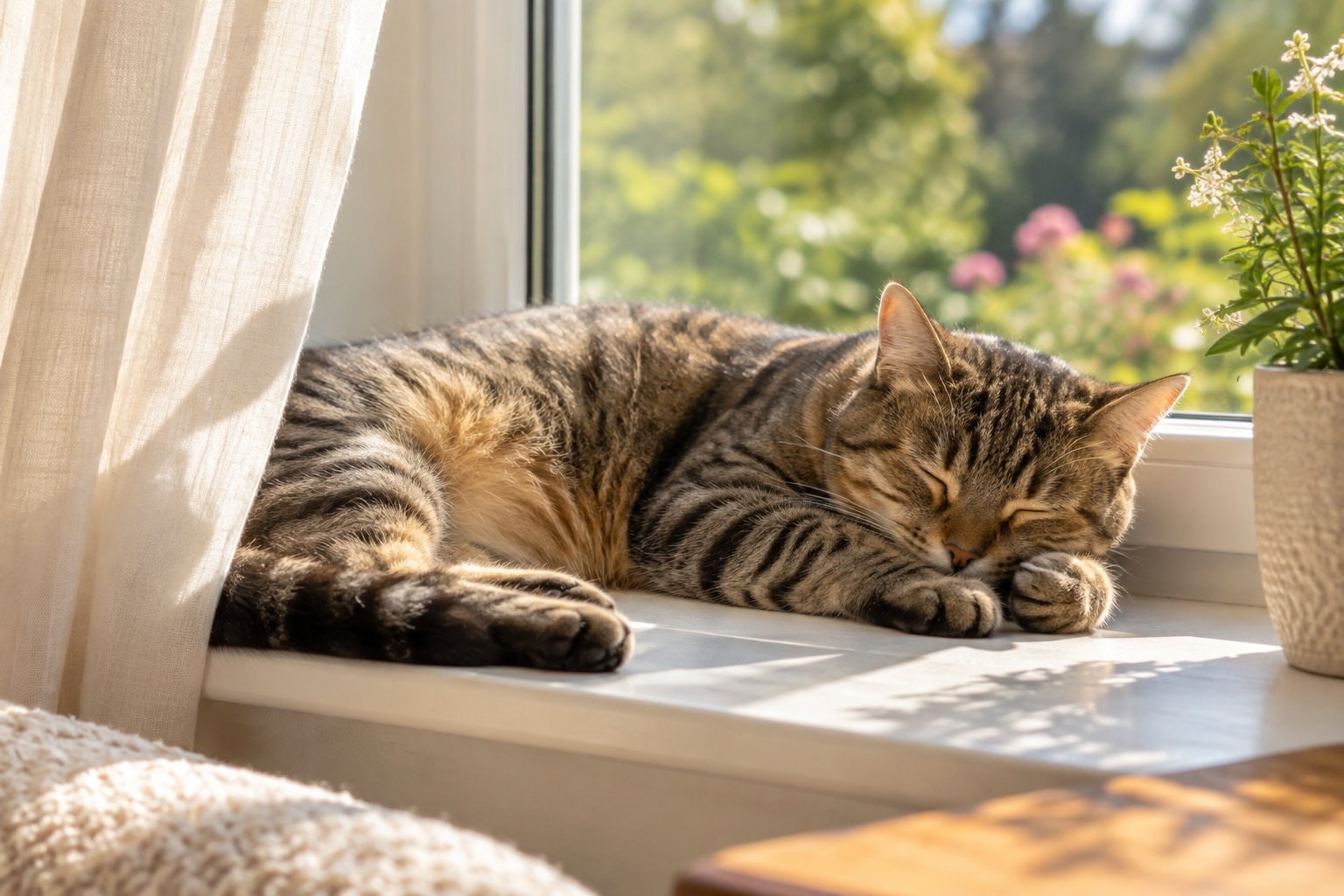
A cat can look settled on a windowsill while small changes are taking place in its daily life. The useful question is often less about whether your cat looks ill and more about what feels different from normal. Perhaps the usual greeting is missing, a favourite perch stays empty, or the litter box needs cleaning more often. Those observations are worth bringing to a veterinarian. This guide helps you describe what you have noticed without trying to name a disease from a few signs.
Regular veterinary visits also matter when everything seems ordinary. The AAHA/AAFP Feline Life Stage Guidelines describe care that changes with a cat’s life stage and lifestyle. A visit is a chance to talk about the cat you live with: its meals, movement, resting places, litter habits and response to other animals. An owner sees the daily pattern; a veterinarian brings an examination and knowledge of feline health. Put those views together by preparing questions before the visit, rather than waiting for a dramatic change to make the questions feel important.
Behaviour belongs in that conversation. The AAFP Feline Behavior Guidelines were written to help veterinary practices include behaviour in feline health care. A cat that avoids company, stops playing or takes a different route around the house may be telling you something through its actions. A page about behaviour can help you notice that change, but it cannot tell you whether discomfort, fear, a change at home or another cause lies behind it. Your cat's usual habits are the starting point. They are not a test that rules illness in or out.
The Well Cat Guide covers signs of illness, common feline conditions, everyday care, veterinary visits and the needs of older cats. It also explains where feline research fits into the picture. The Cornell Feline Health Center describes research, outreach and education as central parts of its work. Start with the topic that matches your question, then follow the related reading when another issue overlaps. The aim is to leave you with clearer observations and better questions for your veterinarian, not a plan for diagnosing or treating a cat on your own.
Start with the change you can describe
If something has changed, write down what you actually saw. A cat leaving food in the bowl is an observation; deciding that it dislikes the food is an explanation. Keep those separate. Note whether the change happens during meals, after activity, near another cat or in a particular room. Include what still seems usual as well. A short, plain account can be more useful than a long list of possible diseases found while reading.
You do not need to watch your cat continuously or turn the house into a testing space. Familiar moments are enough to help you remember its pattern: filling the water bowl, cleaning the litter box, offering a game or settling down in the evening. If a concern is urgent, contact a veterinarian before spending time making notes. Reading is something to do alongside veterinary care, never a reason to put that care off.
Use everyday care as a conversation starter
Questions about food, litter and play are welcome questions for a veterinary visit. Bring a description of what your cat eats and how meals work at home. Explain where the litter boxes sit, whether another cat blocks the route, and whether jumping or climbing seems different. The pages in the everyday-care group help you think through those ordinary details. They offer a way to organise the conversation rather than a promise that changing a bowl or a toy will fix a health problem.
Choose reading that fits your household. Someone living with an older cat may begin with comfort and movement, while someone welcoming a young cat may begin with indoor spaces and clinic visits. A home with several cats may need to think about access to quiet resting places as well as access to food and litter. There is no need to read the entire guide in sequence. Return to a page when its question becomes relevant.
Take the question back to your veterinarian
Before an appointment, make a brief list of the concerns you most want to discuss. Put a recent change near the top. If a page contains an unfamiliar word, copy the word into your notes and ask what it means for your cat. If a recommendation seems hard to carry out at home, explain the practical difficulty. A clear question about the cat's routine gives the clinic team something concrete to respond to.
When reading about research, keep the difference between a study and an individual cat in mind. Research asks questions about groups, biological processes and patterns. Your veterinarian assesses the animal in front of them. A finding can be interesting without being a diagnosis for your companion. Use the topic index below to find a useful starting point, and use the reading list when you want a fuller explanation of how the subjects connect.
Topic index
Noticing illness
| Topic | What it covers | Read |
|---|---|---|
| What are the signs? Noticing illness in a cat that hides it | Changes in meals, movement, litter habits and breathing. | Read |
| Why cats hide illness — and why behaviour is a health sign | Why a change in behaviour can matter. | Read |
| Common feline illnesses: a plain-language guide | Common conditions and the veterinary assessment they need. | Read |
| Heartworm in cats: five myths and misunderstandings | Heartworm misunderstandings, including the risk indoors. | Read |
| Heartworm and other parasites: questions cat owners ask | Questions about heartworm and other parasites. | Read |
Everyday care
| Topic | What it covers | Read |
|---|---|---|
| Feeding your cat: meals, water and a healthy weight | Meals, water and weight questions for your veterinarian. | Read |
| The litter box: setup, house-soiling and urinary health | Box setup and changes in toilet habits. | Read |
| A good indoor life: what cats need at home | Rest, hiding, climbing and shared living space. | Read |
| Play, exercise and a healthy weight | Games that fit your cat and your home. | Read |
| Dental health in cats | Teeth, gums and changes at mealtimes. | Read |
| Household hazards, lilies and holiday dangers | Plants, household materials and emergency planning. | Read |
At the vet
| Topic | What it covers | Read |
|---|---|---|
| Wellness exams through a cat's life | Check-ups and preparation through a cat's life. | Read |
| Vaccines for cats: what they are and the questions to ask | What vaccination questions to discuss at a visit. | Read |
| Getting your cat to the veterinarian: carriers, car journeys and calmer visits | Carriers, car journeys and calmer examinations. | Read |
| Caring for your cat at home while it gets better | A comfortable space and useful observations while a cat gets better. | Read |
Older cats
| Topic | What it covers | Read |
|---|---|---|
| Caring for an older cat | Comfort, routines and changing needs with age. | Read |
| Arthritis and mobility in cats | Changes in jumping, grooming and movement. | Read |
Behaviour
| Topic | What it covers | Read |
|---|---|---|
| Scratching, aggression, fear and stress: understanding behaviour problems | Scratching, fear, aggression and tension at home. | Read |
Research
| Topic | What it covers | Read |
|---|---|---|
| Feline medicine: cat-focused veterinary care and research | Cat-focused care, guidelines and research organisations. | Read |
| One Health: what feline medicine and human medicine share | Connections between feline and human research. | Read |
| Cats in numbers: what veterinary sources report | Figures reported by veterinary sources and what they mean. | Read |
| The cat health reading list: every topic in this guide, explained | An annotated route through every topic. | Read |
About
| Topic | What it covers | Read |
|---|---|---|
| About The Well Cat Guide | The purpose and limits of this independent guide. | Read |
| Privacy | Personal information, hosting and outbound links. | Read |