
Dental health in cats
- Watch for
- Bad breath, drooling, altered chewing, less eating or a new reaction to touch
- Ask your vet
- What the mouth examination shows and whether further assessment is needed
- Related
- Signs of illness, wellness exams and feline medicine
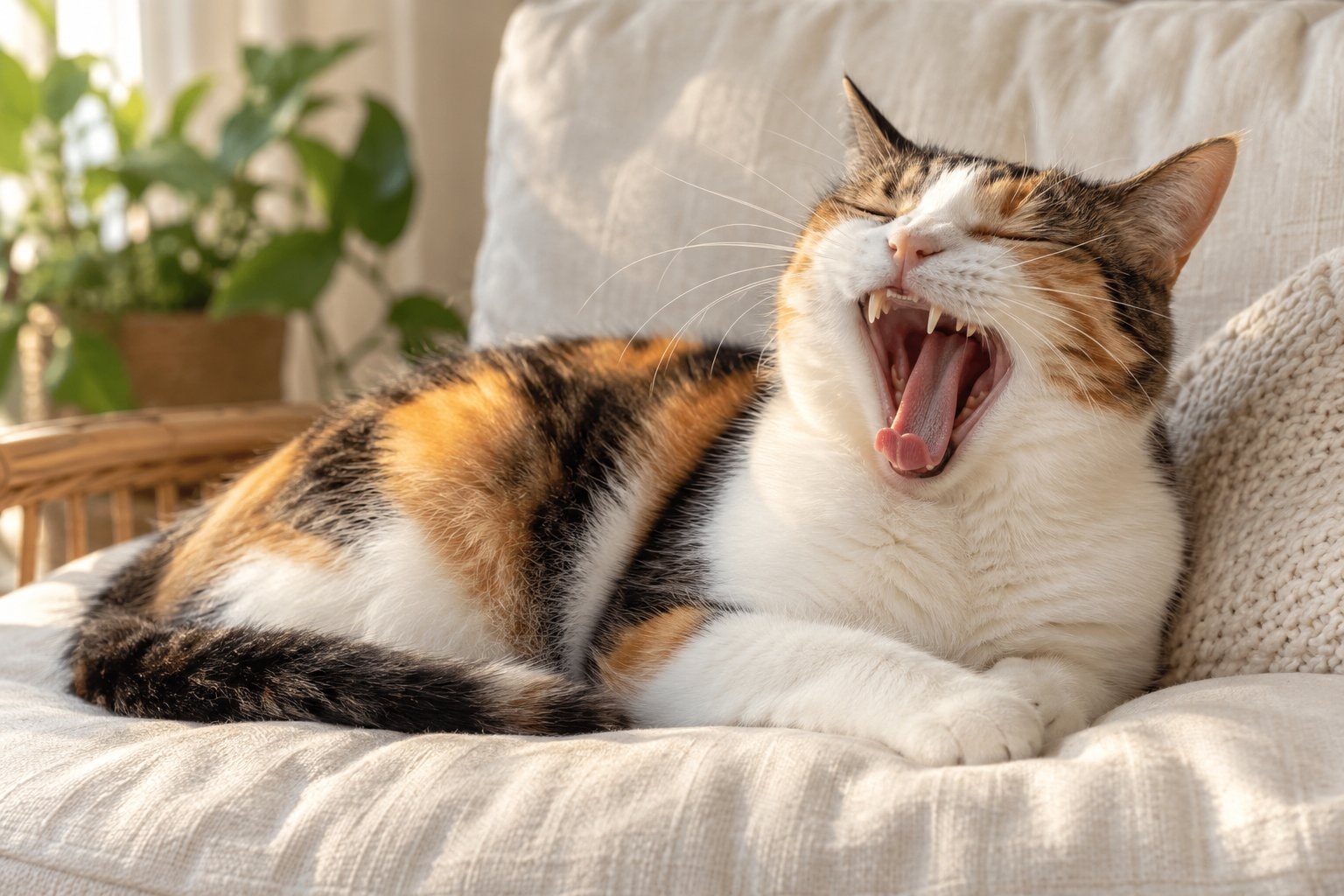
A cat’s dental health can affect ordinary meals, grooming and comfort with touch. Problems may be hard to see during a quick glance at the mouth, and a cat does not have to stop eating completely for its mouth to need assessment. Watch how your cat eats and behaves, then bring a change to the veterinarian. An owner’s observations are useful, but they cannot establish which tooth or gum condition is present.
The Cornell Feline Health Center’s dental disease summary reports that studies find dental disease in 50–90% of cats older than four years. The range is a report from those studies, not a diagnosis of any particular cat. Dental disease includes different conditions, and their severity varies. That is a reason to include the mouth in routine veterinary conversations rather than relying on appearance or age alone.
Gums can become inflamed
Gingivitis means inflammation of the gums around the teeth. The gums may become red, swollen and uncomfortable. Plaque is a film containing bacteria on the teeth; the process around the gum line can contribute to inflammation. The veterinary assessment considers what is happening at the gums and whether another health problem may be involved, rather than treating every red area as the same condition.
A cat with inflamed gums may hesitate at food, drool, turn its head during eating or have bad breath. These changes can be subtle. Describe what happens at a meal: whether the cat approaches normally, takes food differently or leaves more behind. Do not force the mouth open to look for a particular finding. An examination is needed to identify the cause and decide what care is appropriate.
The tissues holding a tooth can be damaged
Periodontitis is damage involving the tissues that attach a tooth to the gums and bone. It can follow uncontrolled gum inflammation. As those supporting tissues are damaged, a tooth can become loose or be lost. The outward signs may resemble gingivitis, including difficulty eating, drooling, a changed chewing posture and bad breath, so appearance at home cannot distinguish the conditions reliably.
The veterinarian may need a more complete assessment than a brief look at the visible teeth. The Cornell account describes examining the support around the tooth and using dental imaging as part of detailed evaluation. Ask the veterinarian what can be assessed during the visit and what needs further investigation. The diagnosis and treatment decisions depend on the cat’s examination, not a comparison with a general picture.
Tooth resorption starts within tooth structure
Tooth resorption is a process in which tooth structure breaks down, beginning inside the tooth and potentially progressing elsewhere. It is not simply a piece of surface dirt. A visible change near the gum line can occur after damage is already established. The cause is not known, and the extent of the problem is something the veterinarian must assess.
An affected cat may be reluctant to eat, drool, turn its head while eating or become irritable. The same outward behaviour can occur with other mouth problems. The veterinarian examines the teeth and may use dental imaging to understand what is happening. Only a veterinarian who examines the cat can diagnose resorption or decide its treatment; an owner cannot judge the internal tooth structure from the visible part alone.
Notice the meal, the breath and the response to touch
Bad breath, drooling and a new reluctance to eat are useful reasons to contact the veterinary clinic. Tell the clinic if food falls from the mouth during meals or the cat paws at its mouth. These are observations to report, rather than proof of a particular dental diagnosis. Mention whether the cat has also become less interested in grooming or less comfortable with ordinary contact.
Keep the description close to what you have seen. A cat that visits the bowl but leaves without eating is different from a cat that finishes a meal more slowly. A cat that turns its head when chewing gives a different observation from a cat avoiding all food. Do not test the mouth with pressure or repeat handling that seems uncomfortable. A clear account helps the veterinarian decide what to examine.
Continued eating does not give a complete picture of comfort. Mouth conditions can vary in severity, and some cats show a change in eating behaviour before they stop. Compare the current routine with the cat’s usual way of eating, and report a persistent difference. The signs of illness guide explains how appetite, grooming, activity and interaction can be viewed together without choosing a disease label.
Include the mouth in wellness visits
The Merck Veterinary Manual’s routine care guidance includes dental care within health care throughout a cat’s life. Ask about the mouth at a visit even if no clear problem is visible at home. An examination can open a discussion about what the veterinarian sees, which changes to watch for and whether a more detailed dental assessment is needed.
Bring observations about meals, breath, drooling and changes in handling. Mention other signs such as weight loss, thirst or a poorly kept coat, because mouth problems need to be considered within the cat’s wider health. The wellness exam page explains how a simple list of home changes can support the conversation, without expecting you to perform a dental examination yourself.
What the oral-health guidelines cover
The Feline Veterinary Medical Association’s 2025 oral health and dental care guidelines bring together evidence and expert consensus for veterinary teams. Their topics include oral disease, patient assessment, evaluation and records, dental care and communication with caregivers. The guidelines concern clinical decisions and a continuing approach to care; they are not an individual set of instructions for an owner to apply without an examination.
Ask the veterinarian to explain unfamiliar terms in the context of your cat. A discussion can separate what is known from what needs further assessment, and what to watch for from what the clinic needs to decide. The feline medicine page describes how cat-focused veterinary guidance fits into the wider field. The meaning of a dental finding still depends on the cat’s own assessment.
Keep home questions with the veterinarian
If the veterinarian discusses home oral care, ask what is appropriate for this cat and which changes mean you need to contact the clinic again. A painful mouth needs assessment before attempts at home care. This guide does not provide a method for cleaning, medicating or treating the mouth. Follow the examining veterinarian’s directions and ask for clarification whenever the plan is unclear.
A cat that is not eating needs urgent veterinary contact, even if you suspect the teeth are the reason. Contact a veterinarian or an emergency veterinary clinic now. For less dramatic changes, describe the difference promptly rather than waiting for a tooth to look clearly damaged. Only a veterinarian who examines your cat can diagnose it or decide its treatment.