
Scratching, aggression, fear and stress: understanding behaviour problems
- Watch for
- New withdrawal, tense posture, sharp reactions to touch or house-soiling
- Ask your vet
- Whether health, pain, social tension or the environment could be involved
- Related
- Indoor life, play, litter-box access and signs of illness
A behaviour problem begins with something a cat is doing in a particular setting. Scratching furniture, hiding from visitors or reacting sharply to touch can be frustrating, but the label alone does not explain the cause. Notice what happens before the behaviour, what the cat does and how it differs from its usual routine. A new change can have a medical cause, so a veterinary assessment belongs early in the discussion.
Scratching is ordinary feline behaviour
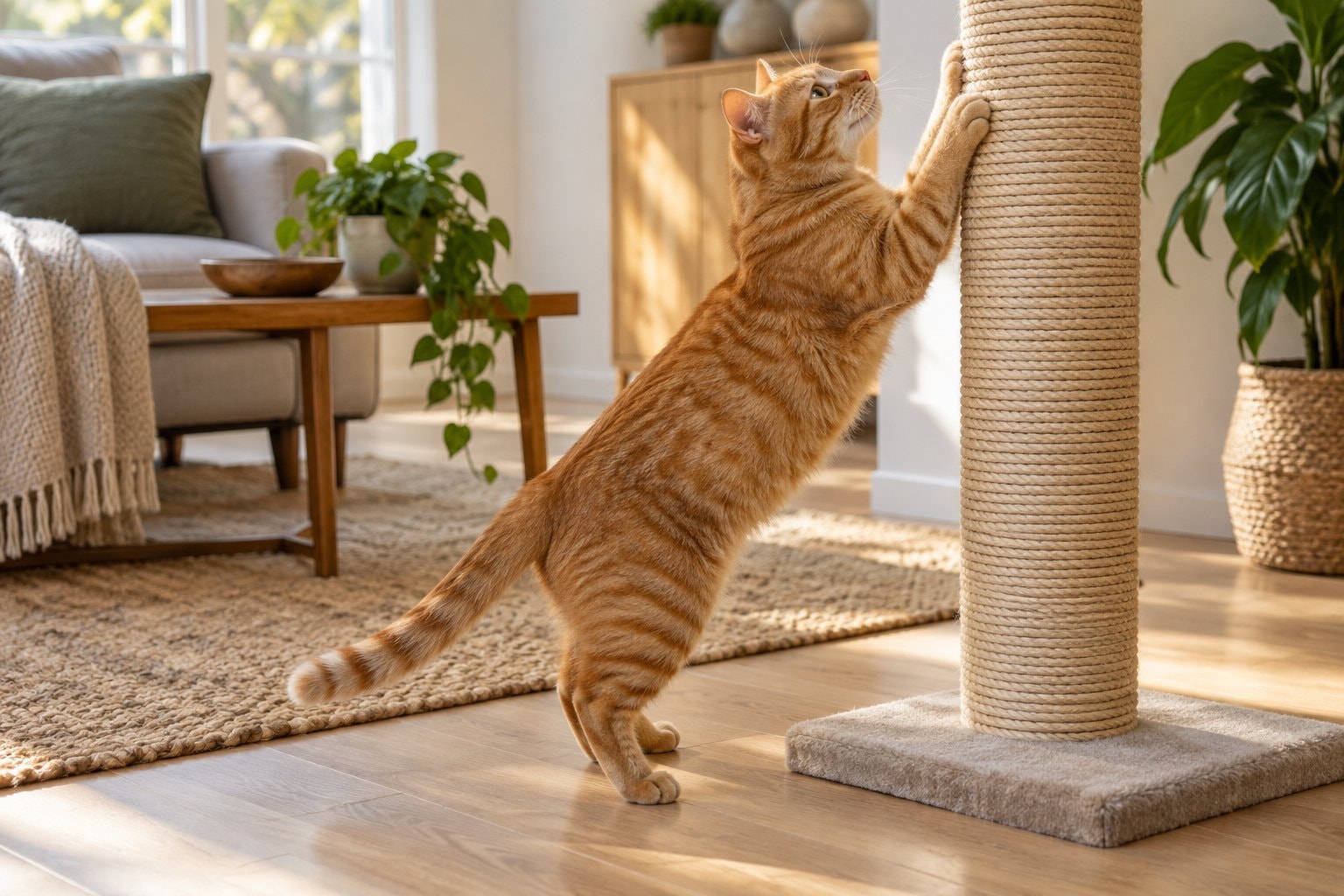
Cats need to scratch. Scratching helps shed the outer covering of the claws, and it can also leave scent from the paws. A cat scratching a sofa is using a surface available in its territory, rather than communicating a judgement about the furniture. The useful household question is which suitable surfaces the cat can reach and whether they remain stable when used.
Provide sturdy scratching surfaces in places the cat uses, with room for a comfortable stretch. Some cats use an upright post, while others prefer a pad. Watch the cat’s choice rather than expecting every cat to like the same texture or position. A surface that tips or wobbles can be unappealing. The indoor life guide considers scratching alongside resting places, activity and access to other resources.
Aggression can have different triggers
The Cornell Feline Health Center’s aggression guide explains that aggression can have complex triggers and that medical causes must be considered before a behaviour plan is chosen. Painful joints, dental disease and thyroid disease are among the possible medical contributors. A description of when the cat hisses, swats or bites is more useful than assuming it has become difficult by choice.
Look at the face and the whole body. Flattened or turned-back ears, enlarged pupils, a tucked tail, a low crouch or raised fur can signal fear or agitation, depending on the setting. A cat may show more than a single kind of aggression. Avoid forcing contact, and describe the pattern to the veterinarian so an assessment can begin with what actually happens.
Play directed at the wrong target
Play aggression can involve stalking, hiding and pouncing as an animal or person passes. It may be seen in young cats that have had limited chances to learn appropriate play. Notice the time and place rather than treating each pounce as unrelated. Keep play objects away from your hands and allow the cat to direct hunting-style activity toward them. The play and exercise page explains ways to offer suitable activity in general terms.
Fear and a route to retreat
An unfamiliar person, animal, noise or experience can bring a fearful response. A cat may crouch, hiss, flatten its ears or tuck its tail. Do not corner it or make it accept handling while it is tense. Notice the trigger and give it space. Ask the veterinarian how to approach a situation that cannot simply be avoided, rather than repeatedly exposing the cat and hoping it will stop reacting.
Petting becomes too much
Some cats react during petting or handling, sometimes after first appearing comfortable. Tail lashing, ears moving back or a change in pupil size may come before the reaction. Stop contact when the cat signals discomfort, and avoid uninvited handling. A cat that has newly begun to resent touch needs a medical check as well as a look at how interactions are taking place.
A reaction is redirected
A cat excited by something it cannot reach may react toward a nearby cat or person instead. An unfamiliar cat outside a window or a loud disturbance can be a trigger. The nearest individual is not necessarily the source of the cat’s agitation. Give the situation room to settle, avoid approaching an aroused cat and tell the veterinarian about what happened immediately beforehand.
Pain changes a response
A cat with pain may object to touch or movement that is uncomfortable. A familiar stroke, grooming session or attempt to lift it may prompt a new reaction. Do not repeatedly touch the area to test the response. A veterinarian needs to examine the cat and decide whether a medical problem is involved. Behaviour information helps that assessment, but cannot identify the painful condition by itself.
Tension in a shared home
The AAFP and International Society of Feline Medicine’s environmental-needs guidelines explain that cats can experience stress without displaying obvious signs of it. A shared home can contain tension without constant fighting. A cat may wait for access to a doorway, avoid a resting place or keep away from another cat. Consider how each cat reaches food, water, litter areas and quiet space.
A household arrangement can give cats separate access to the things they need. Notice whether resources are concentrated where a cat must pass an uncomfortable encounter to use them. New arrivals and returning cats can alter familiar relationships. Introductions or renewed introductions need a plan discussed with the veterinarian; rushing contact does not show whether the cats can settle together comfortably.
If cats are fighting, do not reach between them. Use separation and ask the veterinarian for guidance about the next steps. Physical punishment can increase fear or anxiety and worsen aggression. Keep a record of triggers and changes in access, rather than assuming that a cat blocking a route is simply the household leader. The aim is to understand each cat’s needs and keep interactions manageable.
Litter changes also belong in the health discussion
House-soiling can reflect a medical problem, a box preference or the social setting around the box. A cat that avoids another cat may also avoid the route to its litter area. Pain or increased urgency can cause a similar outward result. The litter-box guide explains why an examination is needed before a new problem is treated as a household preference.
The American Association of Feline Practitioners’ behaviour guidelines support including behavioural medicine in ordinary feline health care. Tell the veterinarian about altered social contact, litter habits, activity and response to touch, even if no separate physical sign is obvious. The signs of illness page helps place the behaviour change alongside appetite, thirst, grooming and movement.
Describe the pattern and ask for an assessment
A brief account can name the setting, the trigger you noticed, the behaviour and what changed afterward. Include a change of household routine, a new animal, restricted access to a room or a recent veterinary stay when relevant. Avoid provoking another episode to gather more detail. What you have seen during ordinary life is the information the veterinarian needs to start asking useful questions.
Only a veterinarian who examines your cat can diagnose a medical cause or decide its treatment. The veterinarian may also discuss a suitable behaviour or environmental plan after assessing health. Ask how to judge progress and when to report a further change. A cat’s needs can be addressed without blame, while uncertainty about the cause remains a reason for assessment rather than a reason to wait.