
What are the signs? Noticing illness in a cat that hides it
- Watch for
- A change from your cat’s usual habits, including food, movement and breathing
- Ask your vet
- How quickly the change needs assessment and which observations to record
- Related
- Why cats hide illness, common illnesses and litter-box habits
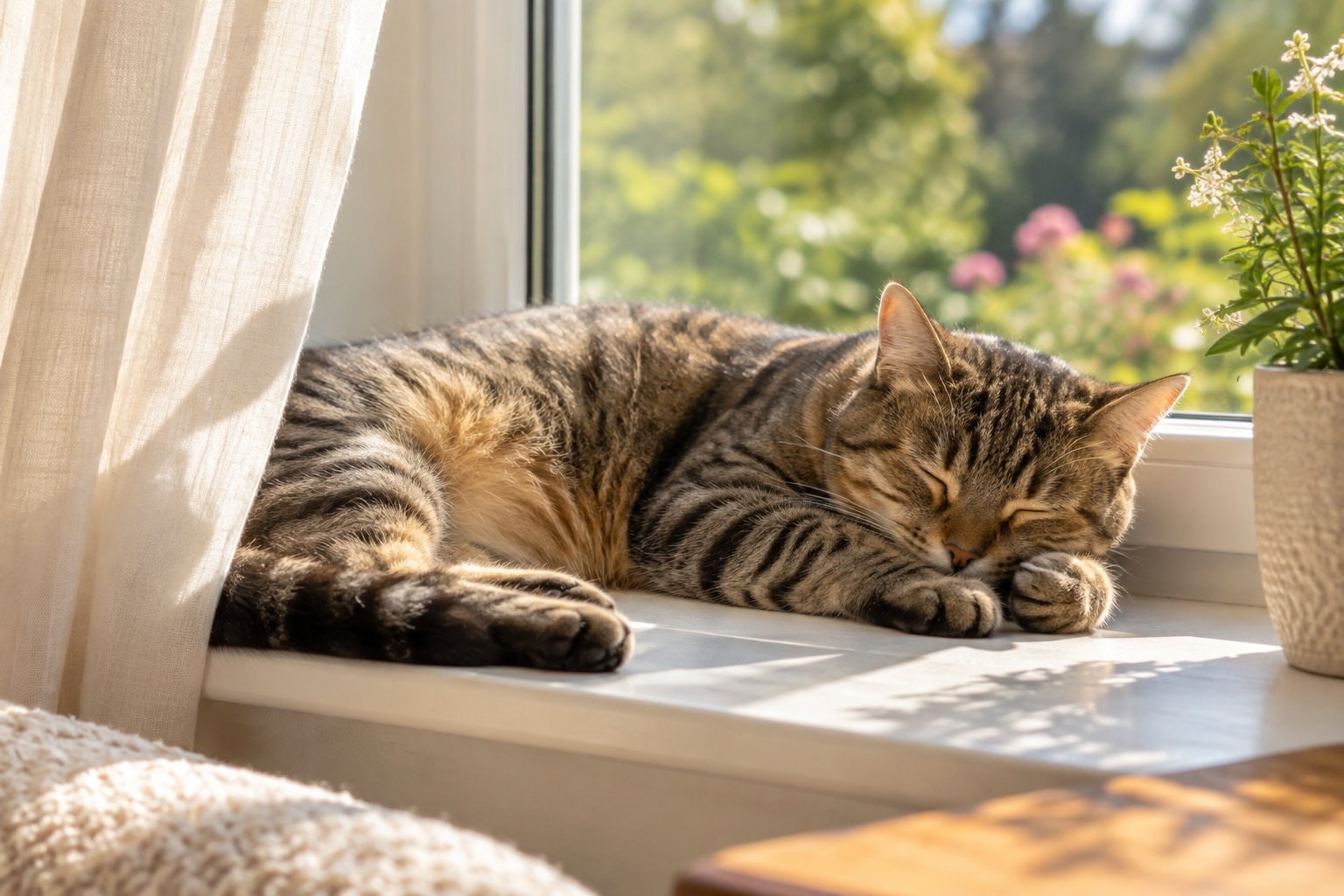
The signs of illness in a cat are often changes in familiar habits. A cat that used to join you on the sofa may stay on the floor. A neat coat may start to look untidy. The water bowl may need filling more often. These observations do not name a disease, but they give a veterinarian useful information. Knowing what is normal for your cat makes a small change easier to describe.
Look across the whole day rather than focusing on a dramatic symptom. Eating, drinking, resting, moving and using the litter box belong together. A change in several parts of that routine is worth reporting, even if the cat still purrs or has a lively moment. The guide to why cats hide illness explains why an outwardly quiet cat may still need assessment.
Litter-box habits
The Cornell Feline Health Center’s urinary disease page lists painful urination, frequent attempts, blood in urine and urinating outside the box among possible signs. Notice whether the cat actually passes urine, rather than counting visits to the box alone. Repeated squatting, crying or licking around the genitals deserves attention. A cat, especially a male cat, straining without passing urine is an emergency.
Litter habits can also change in less obvious ways. A cat may use a different room, leave stool beside the box or hesitate before climbing in. These details matter even when there is no visible blood. The litter-box guide covers access and setup, but a new problem needs a veterinarian’s assessment before it is treated as a preference or a behaviour issue.
Interaction, hiding and stress
A change in sociability can be quiet: a cat no longer greets you, avoids touch or stays apart from its housemates. Another cat may become unusually insistent or react sharply when approached. Describe how this differs from the cat’s usual response. The American Association of Feline Practitioners’ behaviour guidelines make behaviour part of feline health care, so it belongs in a veterinary conversation rather than being dismissed as personality.
A tense body, flattened or turned-back ears, a low tucked tail and repeated withdrawal can signal fear or unease. Note what was happening nearby, including noise, visitors or another animal. Stress and a medical problem can exist together. Do not force a cat from a hiding place just to prove it will come out; tell the veterinarian about the change and ask how to bring the cat for an assessment.
Activity, jumping and sleep
Changes in movement may show up in the route a cat takes. It may stop reaching a high resting place, pause at steps or avoid a jump it once made easily. Less play, stiffness after rest or irritation when touched are useful observations. A cat need not limp for its movement to deserve attention, and an older cat’s reduced activity does not explain the cause by itself.
Notice sleeping patterns in context. Has the cat stopped using its familiar bed, begun resting away from the household or become harder to engage when it is usually active? Write down what you see without trying to impose a normal sleep total on every cat. Cats have different routines. A change from this cat’s routine, especially alongside altered food intake or movement, is the useful part of the story.
Weight, appetite and thirst
Unplanned weight loss matters even when a cat still wants meals. Ask the veterinarian to compare current weight with previous measurements, and mention whether the cat’s body looks slimmer or its coat disguises the change. More food interest does not necessarily mean better health. Diabetes and thyroid disease are among the conditions that can cause weight loss alongside a good appetite; only an examination and tests can establish the cause.
Look at what is eaten, rather than whether food was offered. A cat that visits the bowl but leaves the meal is different from a cat that finishes it. Mention difficulty chewing, drooling or turning the head during eating. Increased thirst can accompany increased urine output, so note both. Do not withhold water to check a suspicion. A cat that is not eating needs veterinary contact now.
Grooming, coat and voice
A cat that grooms less may develop a matted or poorly kept coat. Difficulty reaching part of the body, reduced movement or feeling unwell can be involved. The change is worth describing without choosing an explanation. Mention where the coat has changed and whether the cat is comfortable being touched there. Unusual licking or an area repeatedly attended to also belongs in the notes you bring to the veterinarian.
A new cry, a different-sounding meow or more calling than usual can be another clue. Vocal changes may accompany distress or changes in the airways; their meaning depends on what else is happening. Note whether the sound occurs at the litter box, during movement or when the cat is alone. Purring is not a dependable sign that a cat is comfortable, since cats can also purr when stressed or ill.
Breathing needs close attention
Breathing with effort, open-mouth breathing or sudden breathing trouble calls for immediate help. Do not wait to identify the cause. Coughing and wheezing also warrant a veterinary conversation. The American Heartworm Society’s cat information explains that immature heartworms can cause heartworm associated respiratory disease, known as HARD. This is a lung problem linked to heartworm, but breathing signs can have other causes too.
The appearance of a breathing episode cannot distinguish heartworm from other airway or heart problems. Keep handling calm while contacting the clinic, and follow its directions about bringing the cat in. An owner’s description of when the change started can help the veterinarian, but taking notes or making a video must never delay urgent care. The common illnesses overview gives context after the cat’s immediate needs are addressed.
Keep a simple diary
A brief note can be more useful than a general statement that the cat seems different. Write down the change, when you noticed it and what was happening. Include food actually eaten, water habits, urine or stool, movement and interaction when relevant. Use ordinary descriptions such as hesitating at the steps or leaving part of the meal. There is no need to choose a medical term or name a likely illness.
In a home with other cats, tell the veterinarian if you are unsure whose litter output or food intake you have seen. Mention changes in the household as well as the cat’s signs. Bring previous records if available and ask which observations the clinic wants you to continue. A diary supports a conversation; it is not a reason to postpone a visit while collecting a more complete account.
Call a veterinarian now
- Straining in the litter box without passing urine, especially in a male cat.
- Laboured or open-mouth breathing, or sudden breathing trouble.
- Any contact with lilies, including pollen or vase water.
- Suspected poisoning.
- Not eating.
- Collapse.
For any of these signs, contact a veterinarian or an emergency veterinary clinic now. Explain the change plainly and follow the clinic’s directions. A small sign can matter before the cat looks seriously unwell, so other new or persistent changes also deserve a veterinary discussion. Only a veterinarian who examines the cat can connect the observations with a diagnosis and decide its treatment.