
Caring for an older cat
- Watch for
- Weight, thirst, jumping, grooming and orientation
- Ask your vet
- Which changes need assessment and what access can be improved?
- Related
- Arthritis and mobility · Common illnesses · One Health
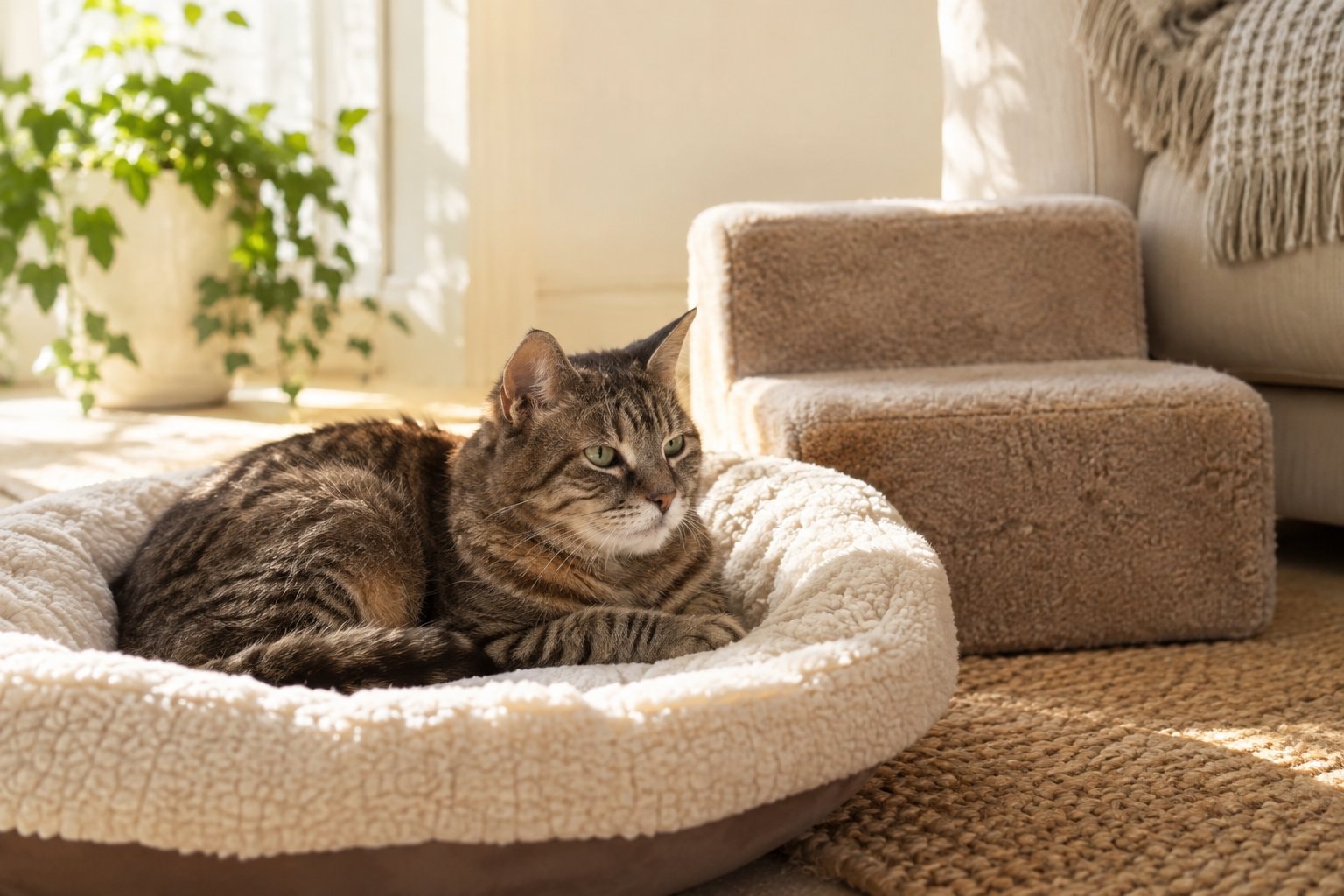
An older cat deserves attention to what it can still enjoy and what has become difficult. Watch the cat's routes through the home, its interest in food and play, and the places it chooses to rest. Changes can be gradual enough to blend into the household routine. Comparing with the cat's earlier habits helps you explain them at a veterinary visit.
Age is context, not an explanation for everything
The Cornell Feline Health Center's senior-cat guide describes ageing as a natural process and advises owners to bring changes in behaviour or physical condition to a veterinarian's attention. A new difficulty should not be dismissed because the cat is older. The examining veterinarian can assess whether illness, pain or another change contributes.
Look at the individual rather than an imagined standard for old cats. A cat that has always preferred quiet company differs from a cat that recently stopped joining the household. Likewise, resting on the floor is more informative when a cat formerly chose a high chair or windowsill. Describe what changed and when you first noticed it.
Some older cats become less adaptable to changes in the household. Keep familiar resources easy to find and think carefully about moving them. Visitors, a new pet or a different room arrangement belong in the history you give the clinic. They are context for the assessment, not proof that a health concern is simply a response to the home.
Watch food, water and weight together
Kidney disease, hyperthyroidism and diabetes are among the conditions that become more common as cats age. Changes in thirst, urine output or body weight deserve a veterinary discussion. A cat that remains enthusiastic about food may still be losing weight. Do not assume that apparent appetite settles the question of health.
Notice how the cat approaches and uses the bowl. Dental disease can make eating uncomfortable, while difficulty moving may make the route to food harder. Write down whether interest in meals changed or whether reaching them seems to be the problem. Both observations belong in the account you give the veterinarian.
Keep water readily available and describe a new drinking pattern. Check what is happening in the litter box as well. If several cats share resources, explain what you can observe with confidence. The overview of common feline illnesses can help you understand the terms that may arise during the visit.
Make everyday routes easier to use
Walk through the cat's routine at floor level. Is the food reached by stairs? Does the litter box have a high edge? Is the usual bed on furniture the cat no longer jumps onto? These questions can reveal awkward parts of the home before you assume the cat has simply lost interest in its familiar activities.
Consider low-sided litter boxes in accessible places, with food and water available along routes the cat uses comfortably. Keep meal and litter areas distinct. Steps or a ramp may provide an alternative route to a favored resting place; ask the veterinarian what suits the cat's mobility. Make sure the arrangement is stable and does not create another difficult approach.
Offer a warm, soft bed somewhere easy to reach, with a choice about contact with the rest of the household. A sheltered place can remain accessible enough for observation. Keep essential areas familiar while discussing needed changes with the clinic. The aim is a usable home, without demanding that the cat climb to reach ordinary necessities.
Watch whether a changed arrangement is actually used. A step beside a chair does little if it blocks the route the cat prefers. Notice pauses, hesitation and abandoned attempts rather than urging the cat to try harder. The page on arthritis and mobility explains why subtle differences in movement deserve assessment.
Grooming and contact are worth noticing
Older cats may groom less effectively, and changes in coat condition can become apparent. Look for new untidy areas during ordinary interaction. Ask the veterinarian about an appropriate grooming routine if handling has become difficult. Do not force contact with an area the cat suddenly dislikes being touched.
Observe changes in patience or social habits alongside movement and grooming. Pain or impaired mobility can influence behaviour, so irritability is worth describing rather than treating as a character flaw. Keep the account concrete: the cat moves away from touch, no longer settles in a usual place or avoids an activity it previously chose.
Changes in sleep and orientation need an assessment
The Cornell Feline Health Center's cognitive-dysfunction page describes signs such as disorientation, changes in sleep and wakefulness, reduced interest in play, house-soiling and unexpected loud vocalization. These signs can overlap with other health problems. They are reasons for a veterinary assessment rather than a checklist for diagnosing cognitive dysfunction at home.
If the cat seems confused, describe what it does and where it happens. Note whether it has trouble finding familiar resources, becomes vocal at unfamiliar times or appears to change its usual sleep pattern. Include changes in hearing, sight or movement if noticed. Avoid assuming that all of these changes have the same cause.
A study of ageing cat brains found deposits of beta-amyloid and altered tau proteins, with patterns that differed by age. That is a finding about brain tissue, not a way to interpret an individual cat's behaviour without an examination. The wider research discussion appears on One Health.
Plan veterinary review around this cat
The Cornell senior guide explains that a veterinarian may suggest more frequent evaluations for an older cat, including review of medical and behaviour history, weight and body condition. Ask what the clinic wants you to observe between visits. Keep those notes together so gradual changes are easier to discuss.
Bring questions about comfort, access to resources and the parts of care that have become difficult for the household. A useful plan takes account of the cat's needs and the caregiver's ability to carry it out. Ask for clear written instructions and clarification of anything unfamiliar. The plan belongs to the veterinarian who assesses the cat.