
Caring for your cat at home while it gets better
- Watch for
- Eating, drinking, litter output and comfort
- Ask your vet
- What changes need a call, and when is the next check?
- Related
- Getting to the vet · Household hazards · Signs of illness
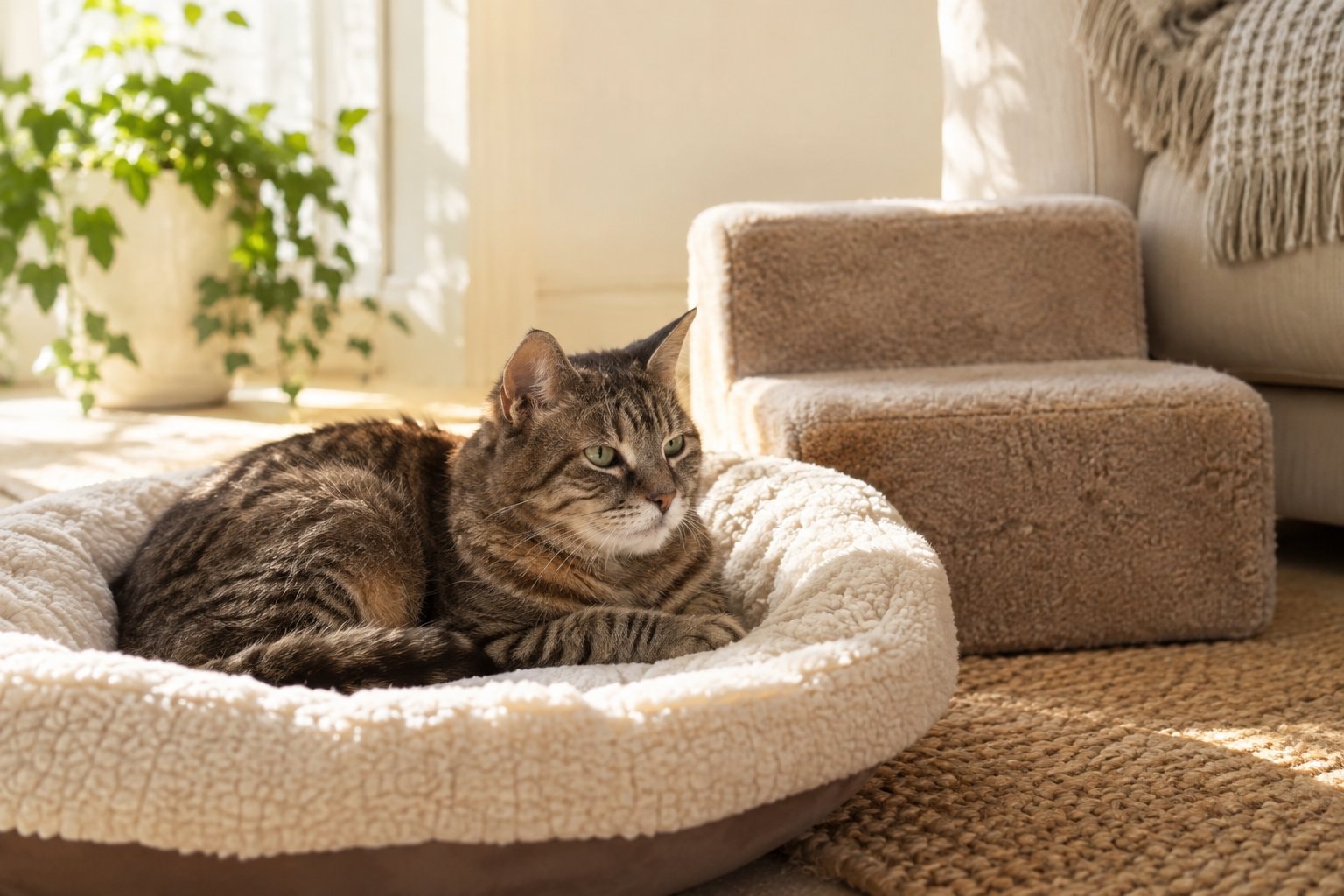
Caring for a cat at home after illness begins with the plan from the veterinary clinic. The cat's condition determines what is appropriate, including where it rests and what you need to watch. Keep the written instructions close at hand. A settled space and a clear account of changes make it easier to explain how the cat is doing when you speak with the team.
A room the cat can use easily
Choose a quiet, warm area where the cat can rest without constant interruption. Think about the route to food, water and litter from the cat's point of view. Keep those essentials within easy reach, while leaving distinct places for meals and toileting. Ask the clinic whether the room arrangement fits any limits in the cat's individual instructions.
Offer comfortable bedding on a surface the cat can reach without a difficult climb. Keep the room dry and avoid a draft across the sleeping place. Allow a choice between a sheltered resting spot and a more open one. The aim is somewhere you can observe the cat without making it feel that it has to stay exposed.
Before the cat settles in, block spaces where it could disappear beyond your reach, such as a narrow gap behind heavy furniture. Leave a suitable hiding place that remains accessible. Do not turn every check into an attempt to bring the cat out. Look for a resting arrangement that gives the cat privacy and allows you to see how it is doing.
Let other animals and visitors stay away if their presence unsettles the cat. Explain the room's purpose to everyone in the household, so the cat is not repeatedly disturbed by well-meant attention. A familiar towel and a predictable setting can be useful topics to discuss with the clinic when planning care for a cat sensitive to change.
Watch ordinary activities closely
The Cornell Feline Health Center's senior-care page explains that cats may conceal illness even when a medical problem is serious. That makes a practical account of ordinary activities useful. Notice whether the cat goes to food and water, reaches the litter box and settles comfortably, rather than looking only for an obvious sign of distress.
Keep brief notes about meals: what was offered, what the cat seemed to eat and whether its interest differed from earlier. Follow the feeding instructions from the veterinarian. If the cat is reluctant to eat or the instructions seem difficult to follow, ask the clinic what to do. Do not make a new feeding plan based on a guess about the cause.
Look at drinking and litter output together. Describe whether the water bowl is being used differently and what you notice in the litter box. In a home with several cats, be clear about which observations belong to the cat getting better. Ask the clinic how to keep a useful account if shared bowls or boxes make that uncertain.
Include changes in grooming, movement and interaction. A cat that is much quieter, hides more or objects to contact may be telling you something different from a cat simply resting in its usual place. Describe the change rather than labeling it as laziness or mood. The page on noticing illness explains why small differences matter.
Keep the clinic's instructions clear
Follow the veterinarian's written instructions exactly. Read them before leaving the clinic if possible, and ask the team to explain anything unclear. Ask the clinic team to show anything you are unsure of before attempting it at home. If the written plan and what you understood differ, request clarification from the clinic.
Keep the plan somewhere everyone caring for the cat can find it. Decide who will keep the observation notes and who will speak to the clinic when a question arises. When care is shared, an agreed written account is easier to follow than several remembered conversations. Include the next check and the changes the veterinarian wants reported.
The AAFP and American Animal Hospital Association pain-management guidelines describe the caregiver as part of the veterinary care team. Your contribution is knowing the cat's usual behaviour and noticing what has changed. The veterinarian remains responsible for assessment and the cat's treatment plan; a home diary does not replace an examination.
Keep the resting space free of hazards
The Cornell Feline Health Center's household-hazards page identifies household chemicals as risks that belong out of a cat's reach. Never give a cat human medicines. Check the resting area as carefully as the rest of the home. Keep medicines away, remove loose string and small objects, and keep cleaning materials inaccessible. More detail appears in household hazards.
Notice whether a door, furniture arrangement or item placed on the floor has changed the cat's route to its essentials. Keep the carrier ready for a return visit. If travelling is difficult, the guide to getting your cat to the veterinarian can help you prepare the household and describe concerns to the team.
Know what needs a call back
Before going home, ask which changes need a prompt call and how the clinic wants progress described. Report a worsening appetite, new vomiting, a marked change in litter output or an unexpected change in behaviour. Explain what you have seen and whether it started suddenly. Ask for a decision rather than changing the written plan yourself.