
Arthritis and mobility in cats
- Watch for
- Hesitation, changed routes and less grooming
- Ask your vet
- Could pain explain a change in this cat’s movement?
- Related
- Older cats · One Health · Wellness exams
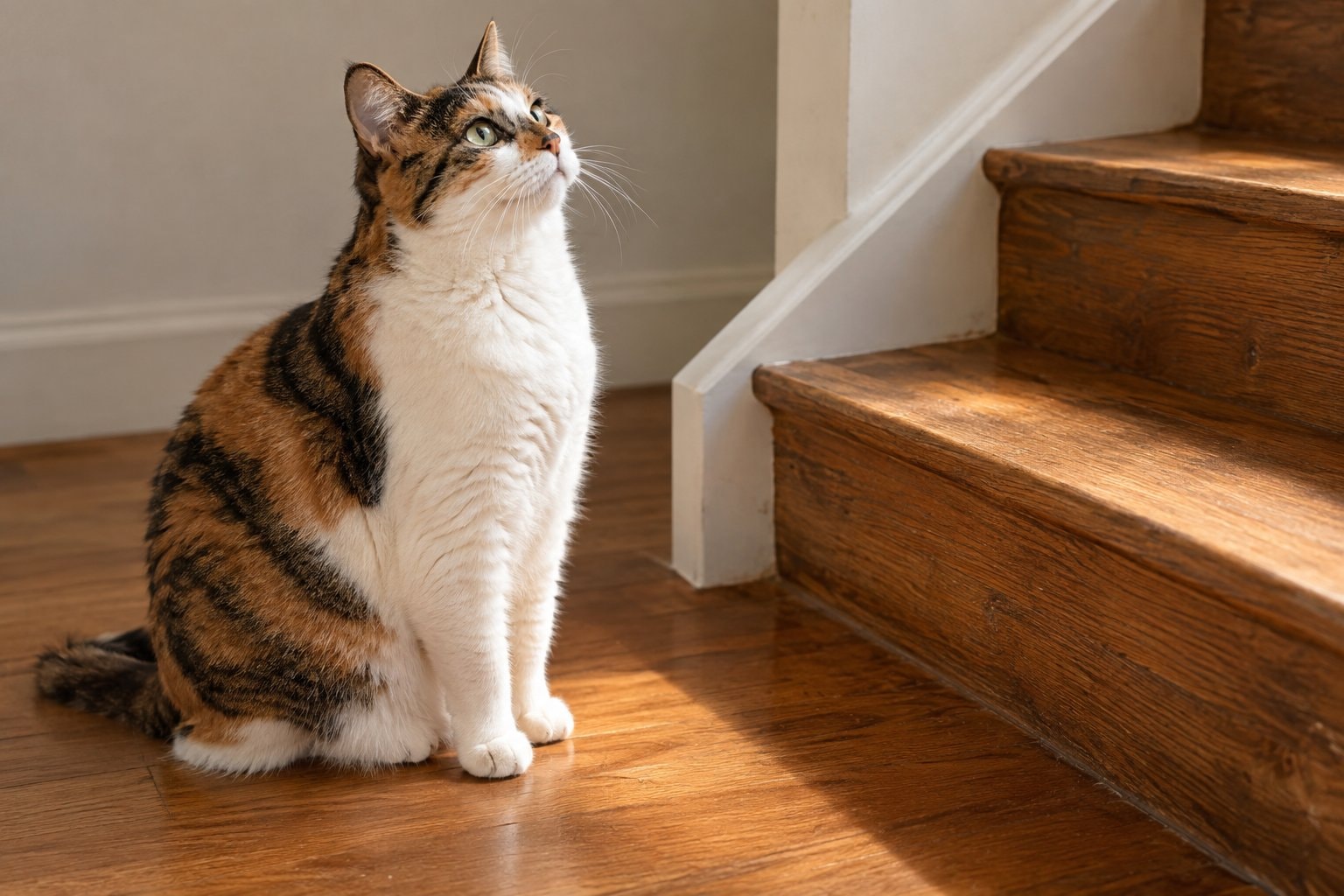
A cat that stops using a favorite windowsill may be showing you a change in mobility. It may still walk across the room and appear comfortable while avoiding activities that were once ordinary. Look at what the cat now chooses to do, what it no longer attempts and which routes it uses instead. Those details deserve a veterinary discussion.
Why joint pain can be easy to miss
A 2012 review of osteoarthritis in cats describes the condition as common in older cats and explains that most affected cats do not show an obvious limp. The review highlights gradual changes in behaviour and lifestyle that owners can mistake for age alone. Absence of limping therefore does not settle a concern about discomfort.
Osteoarthritis is also called degenerative joint disease. The Merck Veterinary Manual's joint-disorders page describes degeneration of joint cartilage that can limit movement and cause pain, and notes that cats often conceal pain. These terms describe a veterinary condition, not a diagnosis you can make from the cat's age or an avoided jump.
A gradual change can be difficult to remember clearly. The chair the cat stopped using may simply have become empty over time. Try to compare the current routine with familiar earlier activities. Report the difference without insisting on a cause. Joint disease is a possibility for the veterinarian to assess alongside other explanations.
Notice the decisions your cat makes
Watch approaches to furniture, stairs and resting places. Does the cat pause before climbing, choose a lower place or abandon an attempt it once made easily? Note whether the change seems consistent or varies. Do not encourage repeated jumps to test the cat. Ordinary activities provide observations without demanding a performance.
Consider the route as well as the destination. A cat may still reach a bed but use a chair or a different part of the room to get there. Another may stop going upstairs when the usual water or litter is on that floor. Describe these changes in access to the clinic rather than assuming the cat no longer wants those resources.
Look at litter use too. A high edge or a trip up stairs can become difficult for a cat with impaired mobility. Soiling outside the box does not prove a behaviour problem or joint disease. Tell the veterinarian about the box's location, its entry and what the cat does before and after approaching it.
Grooming can change as movement becomes uncomfortable. An area of coat may look less tidy, or the cat may seem less willing to turn and groom a part of its body. Mention a change in tolerance of touch as well. Irritability or avoidance can belong in a pain assessment, even when the cat is still sociable at other times.
Describe behaviour, rather than a label
A useful account says which activity changed. Instead of describing the cat as slowing down, explain that it no longer gets onto the sofa, hesitates at the litter box or has stopped grooming an area it previously reached. Note when the change began and whether anything in the home changed around the same time.
Keep short notes on movement, activity, grooming and general interaction. Those are the areas the osteoarthritis review discusses as important in recognizing possible chronic arthritic pain. A note about a familiar task can be easier to compare over time than a broad judgment about mood. Take the account to the examination.
Include what is uncertain. If you have only recently noticed a change, say so. If another person sees the cat during a different part of the day, their observations may add context. The aim is a clear history for the veterinarian, not a home score that claims to measure or diagnose pain.
Keep the home accessible
Review the places your cat uses for food, water, litter and rest. Ask whether it can reach them without an awkward climb. Consider keeping essentials along comfortable routes and offering a resting place at a lower level. Keep food, water and toileting areas distinct so easier access does not mean crowding everything together.
A low-sided litter box can offer a different entry, and steps or a ramp may provide another route to a resting place. Ask the veterinarian which arrangement suits the cat. Check that any route is stable and leaves enough room for the cat to approach and turn. Watch whether the cat actually chooses to use it.
Provide a soft, warm bed in an easy-to-reach area. Let the cat decide whether to rest near the household or in a quieter spot. Keep a sheltered place accessible enough for you to observe the cat. Familiarity can matter, so discuss how to make needed changes without repeatedly moving the cat's ordinary resources.
In a home with other animals, look for interruptions along these routes. A cat may reach its bowl only when another animal leaves, or avoid a resting place that is frequently occupied. Mention those patterns alongside mobility concerns. A usable arrangement needs to take account of the household as well as the cat's physical access.
Pain assessment belongs with the veterinary team
The AAFP and American Animal Hospital Association pain-management guidelines include feline degenerative joint disease and describe caregivers as part of the care team. Your role is to explain changes in the cat's normal life. The veterinarian assesses their meaning through the history, examination and any further investigation that is appropriate.
A cat's behaviour during an appointment may not reproduce what happens at home. Explain the activities it avoids even if it moves readily in the examination room. Ask how the veterinarian will consider those observations, what remains uncertain and what to watch next. Only the examining veterinarian can decide a diagnosis and treatment.
Do not attempt to assess a joint by making the cat repeat a painful-looking movement or by manipulating the limb yourself. Let the veterinary team decide how to examine it. Home changes can be discussed as part of comfort and access, while medical decisions remain with that team.
For broader changes in an older cat's routine, read caring for an older cat. The page on One Health explains why researchers study naturally occurring feline illnesses, including joint disease. Wellness exams provide a place to review gradual changes as well as new concerns.