
Vaccines for cats: what they are and the questions to ask
- Watch for
- Lifestyle changes, past reactions and uncertain records
- Ask your vet
- What is appropriate for this cat’s exposure risk?
- Related
- Wellness exams · Common illnesses · Getting to the vet
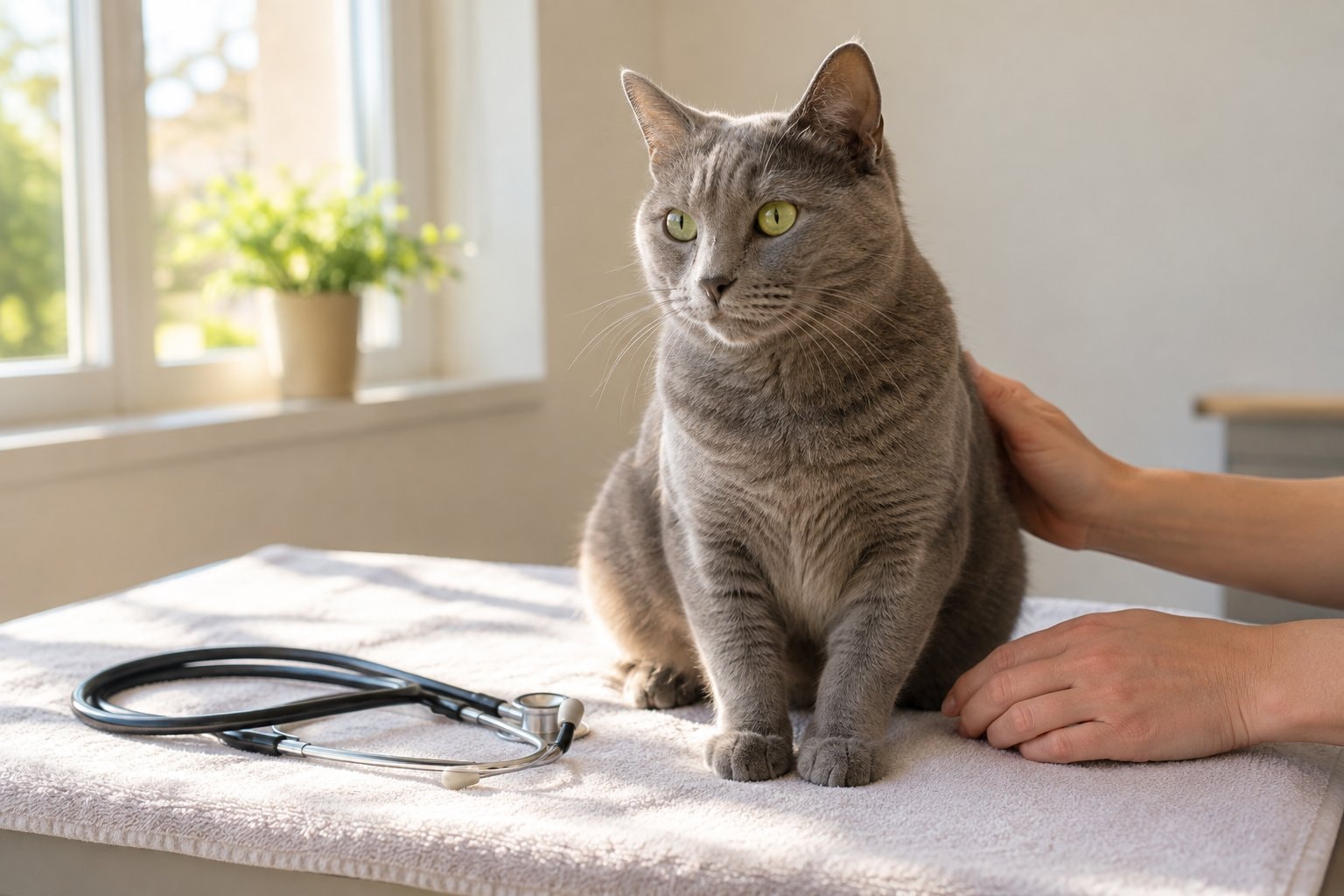
Vaccination is a topic to discuss in the context of your cat's whole life. Age, health, contact with other cats and earlier care all matter to that conversation. A list borrowed from another cat's plan cannot assess those details. Bring records and questions to the veterinarian so the discussion is about your cat rather than a generic set of instructions.
What a vaccine is intended to do
The Cornell Feline Health Center's vaccine guide describes vaccines as preparations that help the immune system recognize infectious agents such as viruses and bacteria. Its explanation focuses on the immune system learning to recognize an agent before a later encounter. Vaccination belongs within veterinary care, with its purpose and limitations explained for the individual cat.
Antibodies are proteins involved in the immune response; other immune cells also play a part. This is different from diagnosing a cat that is already unwell. If your cat has signs of illness, explain them to the clinic before discussing a routine vaccination visit. The veterinarian needs to assess the cat rather than assume that vaccination answers the current problem.
Cornell's guide also explains that vaccination does not provide identical protection in every cat and does not remove every risk of infection. Ask what a vaccine is intended to address and what other parts of care remain relevant. Avoid reading the presence of a vaccination record as a guarantee that a new illness cannot occur.
Core and non-core are starting points for discussion
Core vaccines are those considered broadly important for cats; non-core vaccines depend more on the individual risk of exposure. The categories help structure veterinary decisions, but they are not a plan you need to design yourself. Ask which category a recommendation belongs to and why it fits the cat's circumstances.
Describe whether your cat goes outside and what contact it has with other cats. Include cats that visit the home or join the household, even if your own cat usually stays indoors. Tell the veterinarian about shared living spaces, boarding arrangements and uncertainty about the health history of other cats. Those details are more useful than a simple label of indoor or outdoor.
A lifestyle can change. Moving home, introducing another cat or changing care arrangements may give the veterinarian new information to consider. Mention planned changes before they happen if possible. An earlier recommendation was made for the circumstances known then, so ask whether a new setting changes the discussion rather than guessing what needs to be added.
A guideline is a framework, not your cat's record
The American Animal Hospital Association and American Association of Feline Practitioners published the 2020 AAHA/AAFP Feline Vaccination Guidelines, which emphasize individual risk factors such as life stage, environment and lifestyle. These are guidelines for veterinary professionals to use when developing a care plan. Their existence does not tell an owner which vaccines a particular cat needs.
Ask the veterinarian how a recommendation fits the cat's age and health as well as its surroundings. If past vaccination details are missing, say so directly. The team can decide what needs to be confirmed and how to proceed. Do not fill gaps with assumed dates or infer a vaccination history from how healthy the cat looks.
Bring the records you have in a clear form. If the cat has visited another clinic, earlier records can help the current team understand what was done. Write down any past reaction you observed and explain when it occurred in relation to the visit. Leave interpretation of that history to the veterinarian.
Feline leukemia virus needs an exposure conversation
The Cornell Feline Health Center's feline leukemia virus page says that close contact between cats, including shared grooming, bite wounds and shared bowls, can spread FeLV. FeLV is short for feline leukemia virus. Ask the veterinarian about exposure history and testing as well as vaccination when discussing this infection.
The same Cornell page describes FeLV vaccination as something to weigh against the cat's risk of exposure, and notes that not every vaccinated cat is protected. A cat that shares space with cats of uncertain infection status needs a thoughtful discussion. Vaccination and testing answer different questions, so ask what each recommendation is meant to establish.
If a new cat is joining the home, discuss its known history and how the cats will live together. Tell the clinic which cats share food, water or litter areas. The wider overview of common feline illnesses explains FeLV and other infections in plain language without trying to diagnose the cats in your household.
Benefits and risks deserve plain explanations
Cornell's vaccine discussion includes possible allergic reactions and a longer-term concern about tumors at a vaccination site. These concerns belong in the conversation alongside the risk from the infections under discussion. Ask how the veterinarian weighs those issues for your cat. A broad statement about risk cannot take the place of the cat's medical history.
Ask what changes the clinic wants reported after the visit and how to distinguish an expected response from a concern requiring an examination. Describe what you see rather than assigning it a name. If a reaction happened after an earlier visit, bring that account before the next vaccination decision. The veterinarian can decide how it affects the plan.
Questions to carry into the visit
Useful questions include what infection a recommended vaccine addresses, why the cat's lifestyle makes it relevant, and how earlier records affect the decision. Ask what the team needs to know about other cats and future changes in the home. There is no need to remember technical terminology before you can ask for a clear explanation.
Discuss timing with the veterinarian and keep the resulting plan with the cat's records. This guide does not supply a vaccine schedule. The page on wellness exams explains how vaccination fits into a wider review of health, while getting to the veterinarian covers preparing the carrier and journey.